Aluminum Fixed Ladders · Factory-Direct Since 2004
Aluminum Fixed
Ladder
Aluminum fixed ladder, about 60% lighter than steel and non-sparking. Built to spec with full compliance docs — or compare steel and stainless alternatives.
Alloy Grade
Lighter Than Steel
For Spark-Risk Sites
Rung Diameter
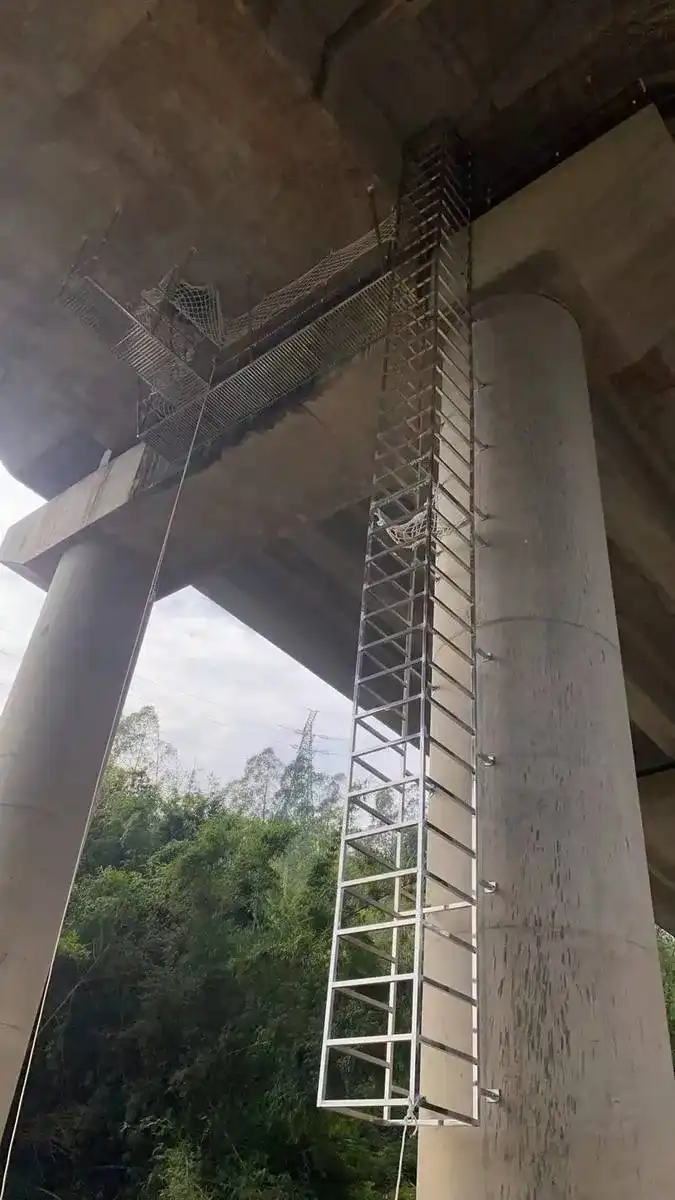
60% Lighter
Easier handling on site, lower freight weight per project.
Non-Sparking
Safe for fuel, chemical and dust-sensitive environments.
Salt Tolerant
Natural oxide layer resists coastal and water-treatment corrosion.
Anodized Finish
Clear anodize or powder coat for long-term appearance.
6061-T6 / 6063-T5 Extrusions
Aluminum Fixed Ladder, Lightweight Access
An aluminum fixed ladder suits telecom towers, water treatment tanks, and roof access where weight and spark risk matter. Standard lengths 10–29 ft, with the same 1.5 kN rung rating as our steel line.
Aluminum Specifications
Aluminum Fixed Ladder Specifications & Dimensions
Extruded 6061-T6 rungs and 6063-T5 stiles, load rated in both kN and lbf, caged or uncaged.
| Specification | Standard Range | Custom |
|---|---|---|
| Standard Heights | 10 / 12 / 14 / 16 / 18 / 20 / 25 / 29 ft | Up to 40 ft engineered |
| Material | 6061-T6 rungs / 6063-T5 stiles | Per spec |
| Rung Diameter | Φ20 mm (0.79″) | Per spec |
| Rung Spacing | 280 mm / 11″ (≤300 mm) | Per project spec |
| Clear Width | 500 mm (19.7″) | Custom width |
| Load Rating | 1.5 kN ≈ 337 lbf per rung | Engineered |
| Cage | Φ700 mm (≈27.6″ ID), starts 7–8 ft | Custom hoops |
| Weight | ≈60% lighter than steel | Per design |
| Finish | Mill / clear anodized | Powder coat |
| Corrosion | Non-sparking, salt-tolerant | Marine-grade alloys |
Aluminum Variants
Aluminum Fixed Ladder Options & Configurations
Standard, caged, and platform aluminum layouts — plus how it compares to steel.
Standard Aluminum
Wall-mounted vertical run, 10–29 ft, clear anodized. For tank, tower and roof access.
Caged Aluminum
Φ700 mm cage from 7–8 ft, or PFAS-ready for heights over 24 ft per OSHA 2018.
Aluminum vs Steel
Lightweight and non-sparking aluminum, or cost-effective galvanized steel — we quote both.
Factory-Direct Aluminum Pricing
Factory-Direct Pricing & 24h Quote
Aluminum quoted by extrusion weight and process, with steel and stainless alternates on the same sheet.
Custom quotation priced by weight & process. Industry reference: caged ladders ≈ USD 899–1,099/ton.
Certifications
Compliance & Documentation
- OSHA 1910.27 — Full Compliance
- BS 4211:2005+A1:2015
- EN ISO 14122-4
- AS 1657
- Cal/OSHA Title 8
Documentation Package
Every aluminum order ships with complete documentation — no extra cost, no paywall.
-
Declaration of Conformity (DoC)
-
Material Test Certificates — EN 10204 3.1
-
Structural Calculations
-
Welding Procedure Specifications
-
Surface treatment certificates (anodize)
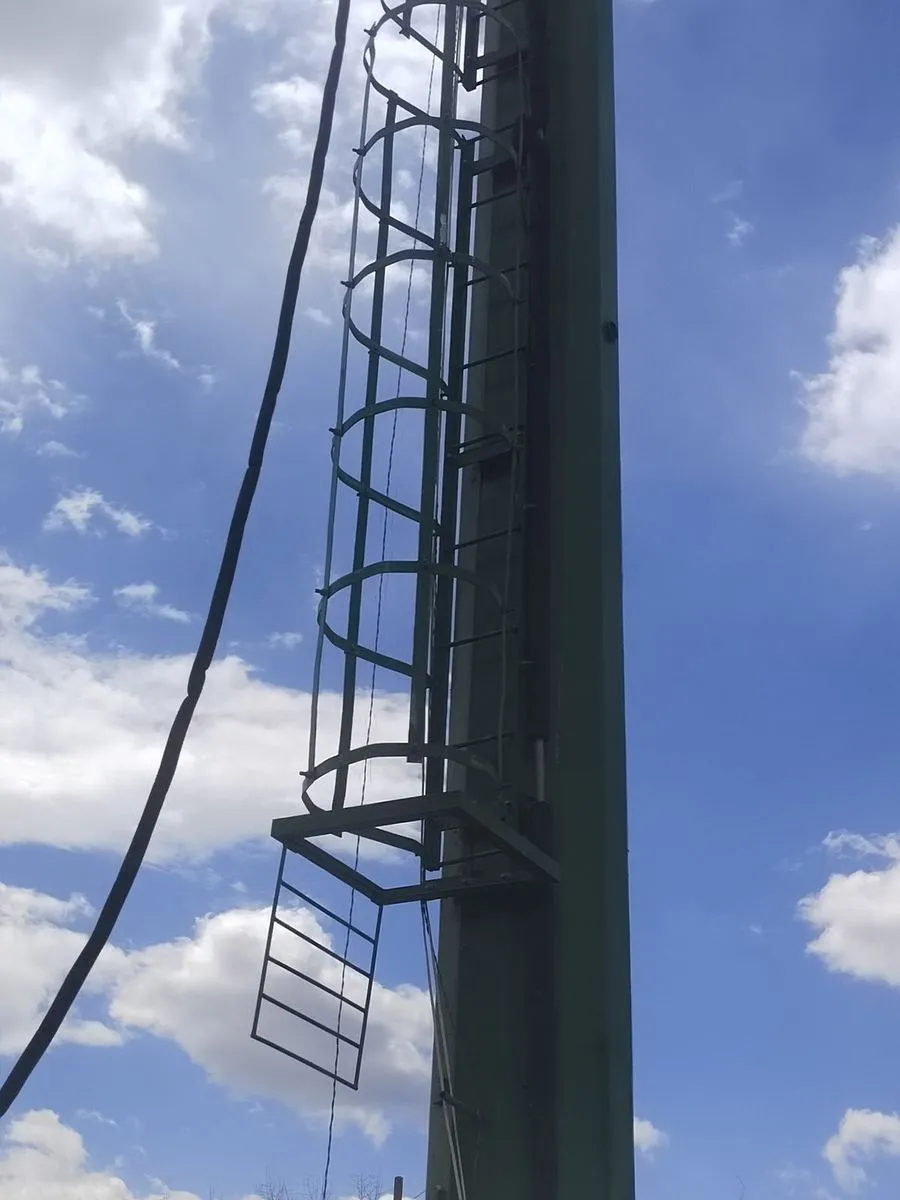
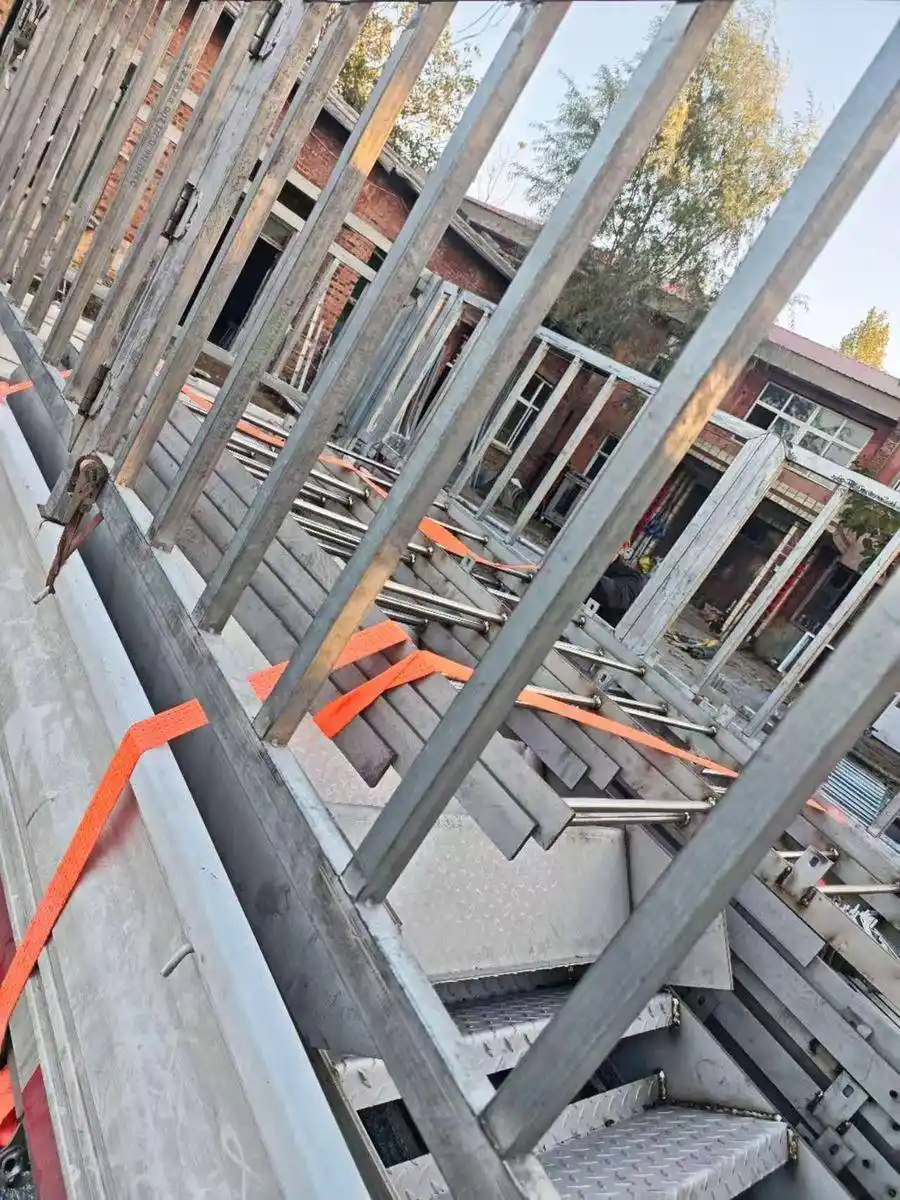
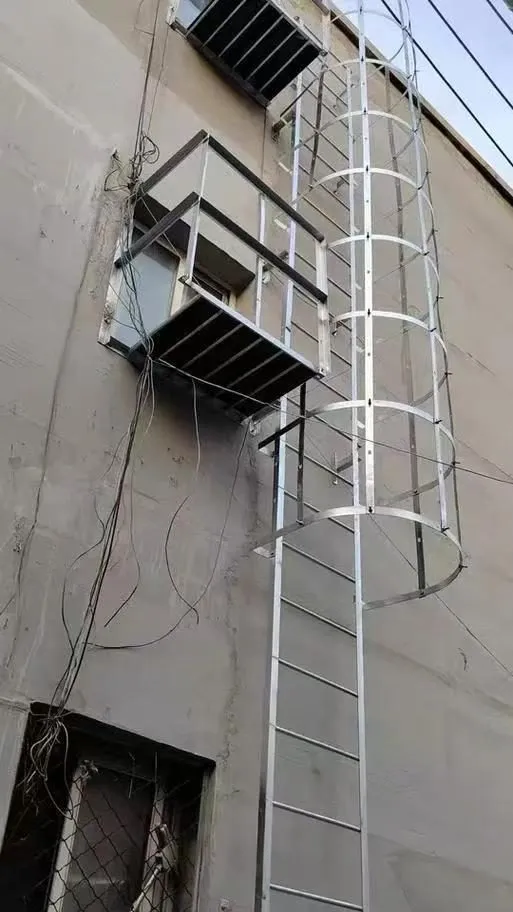
Global Shipping & Factory
Built in China, Delivered Worldwide
-
8–12 × 40ft containers shipped per month
-
VCI rust protection + ISPM 15 heat-treated wooden crates
-
EXW / FOB / CIF terms available
-
15–25 business days production lead time
Common questions
About one-third the weight — roughly 2.7 g/cm³ vs 7.85 g/cm³ — which eases handling on site and reduces load on lightweight structures.
Standard length steps of 10/12/14/16/18/20/25/29 ft, with any other height built to your drawings.
Corrosion-prone and coastal sites, retrofit access on lightweight structures, and jobs where easy handling matters more than impact resistance.
Yes — send your spec and our engineers quote aluminum, Q235B HDG steel and SS304/SS316 side by side so you compare on price and duty.
Yes — the rules depend on climb height, not material: above 24 ft a ladder safety system or PFAS applies exactly as for steel.
Aluminum 6061-T6 for Fixed Ladders
What the 6061-T6 designation actually means, how anodizing protects the surface, where aluminum earns its keep — and the honest limits our engineers design around.
| 6061-T6 at a Glance | Value | What It Means for a Ladder |
|---|---|---|
| Alloy Family | 6xxx Al-Mg-Si (aluminum-magnesium-silicon) | The workhorse extrusion alloy — good strength, weldable, corrosion-resistant in air |
| Magnesium (Mg) | 0.8 – 1.2 wt% | Forms Mg₂Si hardening particles during aging |
| Silicon (Si) | 0.4 – 0.8 wt% | Pairs with Mg to create the Mg₂Si precipitates that give T6 its strength |
| Temper "T6" | Solution heat-treated, then artificially aged | Full precipitation hardening — the strongest common 6061 temper |
| Yield Strength | ≈ 276 MPa (40 ksi) in T6; ≈ 240 MPa (35 ksi) in T5 | T6 beats T5 by about 15%; both exceed Q235B's ≥ 235 MPa (34 ksi) |
| Tensile Strength | ≈ 310 MPa (45 ksi); Q235B steel 370 – 500 MPa | Steel's higher ultimate strength and toughness matter under impact |
| Stiffness (E-modulus) | ≈ 69 GPa vs ≈ 200 GPa for steel | About one-third the stiffness — deflection, not yield, usually sets section size |
| Density | 2.70 g/cm³ vs 7.85 g/cm³ | Roughly one-third the weight of steel |
| Heat Behaviour | Strength drops above ≈ 100 °C; melts ≈ 660 °C | Not for fire-rated or hot-process access |
Why Anodize?
Sulfuric acid anodizing — the finish 6061 gets
- Natural oxide is thin: the air-formed film is only ≈ 2.5 – 10 nm (25 – 100 Å) — easily scratched and no real defense against chlorides or alkalis.
- The process: sulfuric acid anodizing (Type II) grows a hard oxide layer 5 – 25 µm on 6xxx alloys (BS 3987 / MIL-A-8625 Type II), then sealed.
- Grown, not painted: the coating is part of the metal itself — it cannot peel or flake like powder coating.
- Color options: clear/natural, black, bronze, champagne, plus dyed colors sealed into the porous layer.
- Honest note: anodizing is not armor — galvanic isolation at steel fixings and design details still decide the ladder's real life.
Weight Advantage
One-third the density — real savings in the field
- Density: 2.70 vs 7.85 g/cm³ — an aluminum fixed ladder weighs about one-third of its steel equivalent.
- Typical unit: a 10 ft ladder runs ≈ 30 – 40 kg vs ≈ 90 – 120 kg in Q235B steel.
- Installation: two installers can carry and fix it without a crane or hoist — faster and safer on small jobs and roof work.
- Freight: export shipping is billed by weight — lighter crates cut logistics cost per unit.
- Structure load: lighter ladder and fixing-point loads suit retrofits on lightweight or older structures.
Where It Fits
Best applications for an aluminum fixed ladder
- Roof and parapet access: a light ladder reduces load on roof anchors, copings and lightweight roof structures.
- Coastal and corrosion-prone air: anodized aluminum outlasts bare steel in salt-laden atmospheres — paired with SS316 fixings and proper isolation.
- Weight-sensitive retrofits: access added to existing structures where steel's mass would overload the mounting points.
- Spark-sensitive zones: fuel depots, chemical and dust-exposed plants where non-sparking material is preferred.
Honest Limitations
What our engineers design around
- Deflection governs: at one-third of steel's stiffness, rungs and stiles need thicker sections to hold the 1.5 kN rating without excess flex.
- Welding weakens the heat-affected zone: 6061-T6 welds drop toward ≈ 150 – 200 MPa unless re-heat-treated — load-rated ladders use extruded sections with mechanical joints, not field welds.
- Higher cost per kg: 6061 alloy plus anodizing costs more than Q235B plus hot-dip galvanizing — the payback comes from weight, freight and handling.
- Galvanic corrosion: aluminum is the anode against steel and stainless — direct contact corrodes the aluminum, so insulating washers and gaskets are mandatory at mixed-material joints.
- Heat and fire: strength fades above ≈ 100 °C and the metal melts at ≈ 660 °C — not for fire-rated or hot-process access.
Three Myths About Aluminum Ladders
It does — pitting in chloride-rich coastal air and galvanic corrosion where it touches steel or stainless. Anodizing and isolating washers slow both; neither makes aluminum immune.
Yield is similar to Q235B, but stiffness is one-third of steel's. Deflection — not yield — sets the section size, which is why an aluminum ladder is light but not thin.
The heat-affected zone drops toward ≈ 150 – 200 MPa after welding unless the part is re-heat-treated. Load-rated ladders avoid field welds — extruded sections and bolted joints keep full T6 strength.
Aluminum vs Steel Selection Guide
Aluminum 6061-T6 vs Steel: Which Fixed Ladder?
Aluminum wins on weight; steel wins on toughness, corrosion options and compliance paperwork. Here is the honest comparison — and when to spec a steel or stainless alternative instead.
| Property | 6061-T6 Aluminum | Q235B Steel (HDG) |
|---|---|---|
| Density | 2.70 g/cm³ — about 1/3 the weight of steel | 7.85 g/cm³ |
| Yield Strength | 276 MPa (40 ksi) | ≥235 MPa (34 ksi) |
| Typical 10 ft Ladder Weight | ≈ 30–40 kg | ≈ 90–120 kg |
| Corrosion Behaviour | Good in air (natural oxide film); poor against chlorides and alkalis | Needs hot-dip galvanizing 85–100 µm (ISO 1461); then 40–60 years |
| Surface Finish | Anodizing or powder coating — hot-dip galvanizing is NOT possible | HDG, painted or powder coated |
| Heat / Fire Resistance | Strength drops above ≈100 °C; melts ≈660 °C | Retains strength to ≈400 °C |
| Typical Role | Light access, clean indoor sites, weight-sensitive mounting | Industrial fixed ladders, outdoor, high-traffic, load-rated |
| Compliance Paperwork | DoC available | DoC + structural calculation + MTC 3.1 on request |
Where Aluminum Fits
Aluminum Fixed Ladder Applications
- • Roof and facade access where a light ladder reduces structural loading on the fixing points.
- • Clean indoor environments — HVAC rooms, mezzanines, plant rooms where rust staining matters.
- • Sites where the ladder must be man-handled into position without lifting gear.
- • Short runs below 6 m where the weight saving is proportionally largest.
Where Steel Wins
When to Choose a Steel or Stainless Alternative
- • High-traffic industrial access: steel absorbs impact and repeated loading better than aluminum.
- • Outdoor and coastal sites: HDG steel or SS316 stainless outlast aluminum against chlorides.
- • Fire-rated or hot-process areas where aluminum loses strength and melts.
- • Projects that must show MTC 3.1 mill certs, structural calcs and full compliance files.
Aluminum vs Steel Questions
Aluminum Fixed Ladder FAQs
No. The galvanizing bath runs at about 450 °C, which damages 6061 aluminum and produces an unusable coating. Use anodizing or powder coating — or switch to HDG steel for outdoor duty.
Steel is stiffer and tougher under impact and repeated loading. 6061-T6 yields at 276 MPa vs ≥235 MPa for Q235B, and aluminum loses strength above 100 °C — steel is the safer default for industrial fixed ladders.
High-traffic or impact-prone access, outdoor and coastal sites, fire-rated or hot-process areas, and any project that needs MTC 3.1, structural calculations or full compliance files.
Yes. Direct aluminum-to-steel or aluminum-to-stainless contact causes galvanic corrosion. Insulating washers and gaskets at mixed-material joints prevent it — our engineers detail this on every drawing.
Proven in real facilities
Reference projects are shown by industry, country and scale. Client names are available on request with approval.
National utility projects — 15+ countries
23 documented projects, 2021-2025 · 2025
All standardsEnergy & industrial clients — Global
500+ projects since 2004 · 2004-2025
Full compliance docsLargest single order — Malaysia
60 units in one project · 2021
HDGGet Your Quote
Talk to an Engineer
Free drawing review. Itemized quote in 24 hours — aluminum, steel and stainless. No obligation.
Why Work With Dengtai?
Full Compliance Docs
DoC, MTC, structural calcs included free.
24-Hour Quote
Engineering review + itemized quote within one day.
Global Delivery
8–12 containers/month. VCI + ISPM 15 packaging.
Request a Quote
Related Aluminum Fixed Ladder Pages
Explore aluminum configurations, standards, and resources for your project.
Vertical Fixed Ladders
Wall-mounted vertical access solutions
Cage Fixed Ladders
Safety cage configurations per OSHA 1910.27
Steel Fixed Ladders
Galvanized steel alternative, heavy-duty runs
OSHA 1910.27
Full OSHA compliance documentation
Roof Access Ladders
Lightweight aluminum roof access solutions
What Is a Fixed Ladder?
Definitions, types & applications