Stainless Steel Ladders · Factory-Direct Since 2004
Stainless Steel
Fixed Ladders
Stainless steel fixed ladders in SS304 & SS316 — pickled, passivated, and 100% PMI checked. MTC 3.1 mill certs with every order.
Alloy Grades
Per-Rung Rating
Rung Diameter
Corrosion Duty
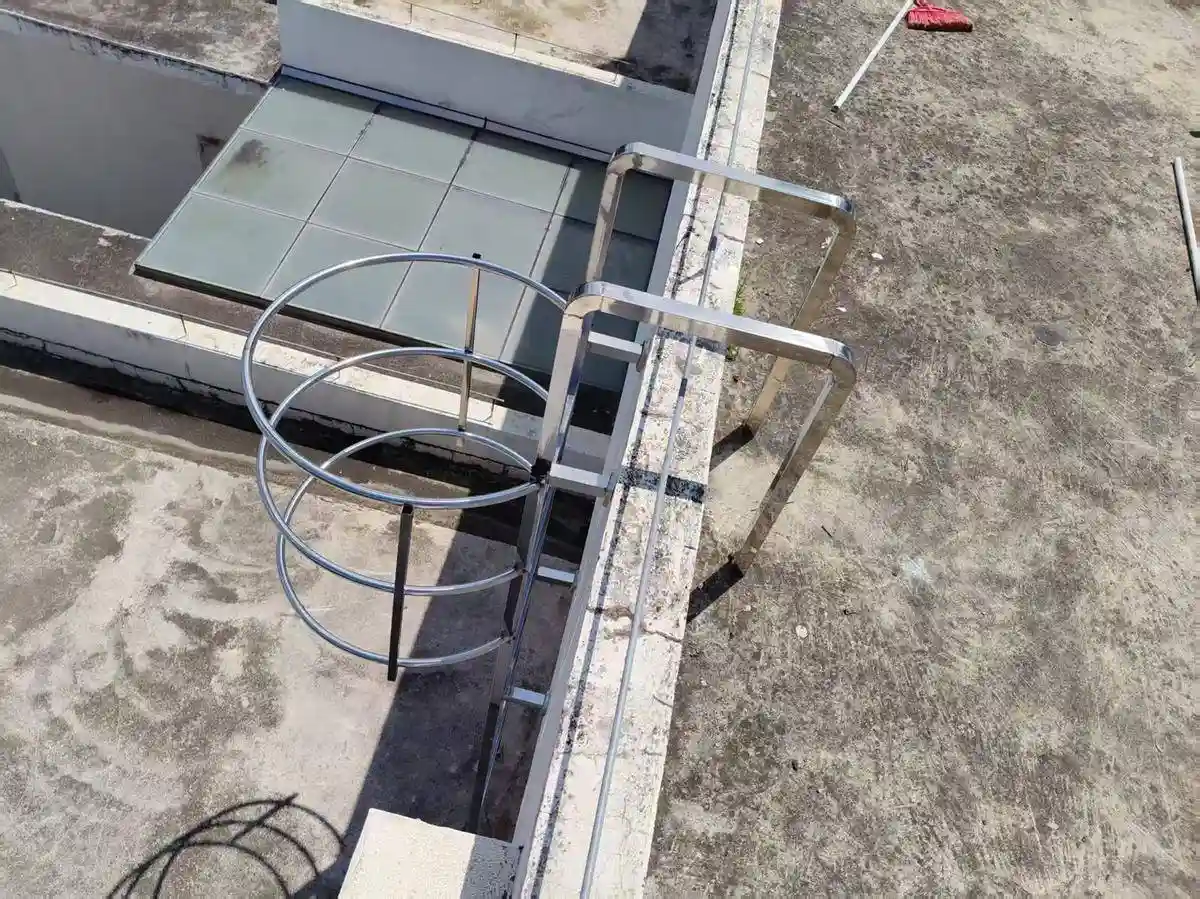
SS304 & SS316
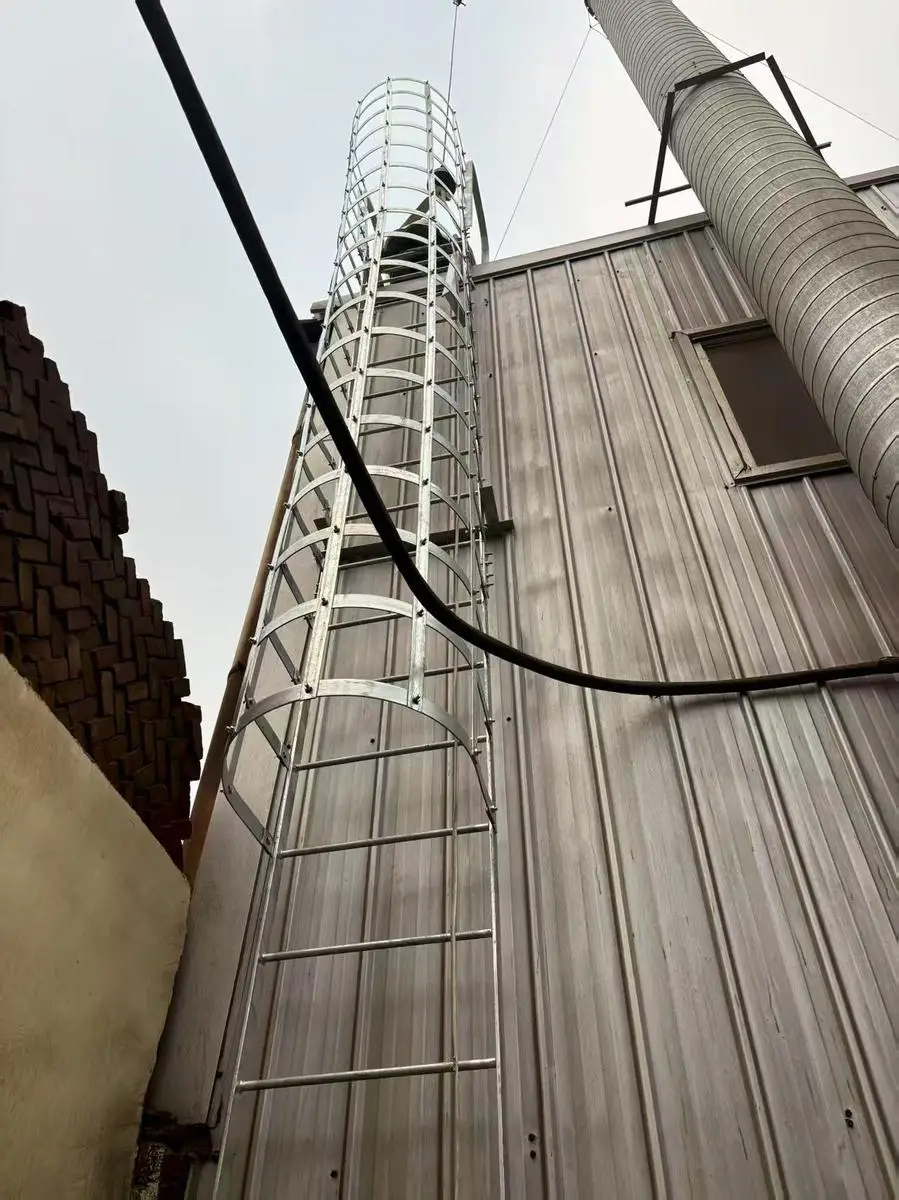
Stainless Steel Fixed Ladder, Corrosion-Grade Access
A stainless steel fixed ladder for chemical plants, marine environments, and food processing. Every weld 100% PMI checked, every batch traced with EN 10204 3.1 mill certs.
- Pickled & passivated surface finish
- SS304 for food & pharma, SS316 for marine & chemical
- Electropolish option for cleanroom installs
100% PMI Checked
Positive material identification on every weld and batch.
MTC 3.1 Mill Certs
EN 10204 3.1 material certificates with every order.
Pickled & Passivated
Removes weld scale and restores the corrosion-resistant oxide layer.
SS316 Moly Grade
Added molybdenum for chloride and saltwater resistance.
Stainless Specifications
Stainless Steel Fixed Ladder Specifications & Dimensions
SS304 and SS316 material options, dual-unit load ratings, and surface finishes for hygienic and marine duty.
| Specification | Standard Range | Custom |
|---|---|---|
| Standard Heights | 10 / 12 / 14 / 16 / 18 / 20 / 25 / 29 ft | Up to 40 ft engineered |
| Material | SS304 / SS316 / SS316L | Duplex 2205 |
| Rung Diameter | Φ20 mm (0.79″) | Per spec |
| Rung Spacing | 280 mm / 11″ (≤300 mm) | Per project spec |
| Clear Width | 500 mm (19.7″) | Custom width |
| Load Rating | 1.5 kN ≈ 337 lbf per rung | Engineered |
| Cage | Φ700 mm (≈27.6″ ID), starts 7–8 ft | Custom hoops |
| Surface | Pickled & passivated, 100% PMI checked | Electropolish |
| Traceability | MTC 3.1 mill certs per batch | Full lot traceability |
| Finish | Brushed / matte | Mirror finish |
SS304 vs SS316: Stainless Steel for Fixed Ladders
Both grades are austenitic stainless — the difference is molybdenum. This is what the composition actually does, how pickling and passivation protect the welds, and how to keep stainless ladders stainless for decades.
| Element (ASTM A276 / A240) | SS304 ("18/8") | SS316 | Why It Matters |
|---|---|---|---|
| Chromium (Cr) | 18.0 – 20.0% (≈ 18%) | 16.0 – 18.0% | Forms the invisible chromium-oxide film — the actual corrosion shield on every stainless surface |
| Nickel (Ni) | 8.0 – 10.5% (≈ 8%) | 10.0 – 14.0% | Stabilises the austenitic (FCC) structure — what makes 304/316 non-magnetic and tough at low temperature |
| Molybdenum (Mo) | None | 2.0 – 3.0% | The whole difference: Mo hardens the passive film against chloride attack, resisting pitting and crevice corrosion in salt air and chemical washdown |
| Carbon (C) | ≤ 0.08% | ≤ 0.08% | Kept low so welding does not precipitate chromium carbides and starve the weld heat-affected zone of chromium |
| Pitting Resistance (PREN) | ≈ 18 – 20 | ≈ 24 – 26 | PREN = %Cr + 3.3 × %Mo + 16 × %N — molybdenum lifts 316's chloride tolerance by roughly a third |
| Mill Source & Traceability | TISCO, MTC 3.1 per batch | TISCO, MTC 3.1 per batch | EN 10204 Type 3.1 mill certificates trace melt and grade; every delivered weldment is 100% PMI-checked against the ordered grade |
Austenitic Structure
Why 304/316 are non-magnetic — and tough in the cold
- Face-centred cubic lattice: nickel holds the austenitic structure at room temperature, which is what separates 304/316 from magnetic ferritic and martensitic stainless grades.
- Non-magnetic as supplied: annealed 304/316 will not hold a magnet — but bending, rolling and machining cold-work the surface and can induce slight magnetism. That is normal, not a defect.
- No brittle transition: austenitic stainless stays ductile far below freezing — cold stores, freezer rooms and low-temperature plant access are safe, unlike carbon steel which embrittles.
- Weldable without pre-heat: the austenitic matrix welds cleanly under ISO 5817 Level C; the risk is not cracking but heat-tint in the weld zone — handled by pickling (below).
Corrosion Mechanism
The self-healing chromium-oxide film
- A 1–3 nm shield: chromium reacts with oxygen to form a dense Cr₂O₃-rich passive film that is transparent, bonded to the metal, and impermeable to water and oxygen.
- Self-repairing: scratch the surface and the film instantly reforms in air — as long as the metal underneath still contains enough free chromium (≥ ≈ 10.5–12%).
- Why it fails: the film is attacked by chlorides (salt, bleach cleaners), or starved of chromium where welds precipitated carbides — pitting starts exactly there.
- Molybdenum's job: in 316 it strengthens the film so chloride ions cannot punch through — which is why 316 is specified for coastal and chemical duty.
The Process
Pickling & passivation — restoring the welds
- Welding damages the surface: the heat-affected zone reaches 425–815 °C, where chromium and carbon combine into grain-boundary carbides — leaving the surrounding metal chromium-depleted and unable to form a passive film.
- Pickling removes it: a nitric + hydrofluoric acid bath dissolves the heat tint, oxide scale, chromium-depleted layer and any embedded iron particles from the weld zone.
- Passivation rebuilds the film: a nitric or citric acid treatment grows a fresh, chromium-rich passive film on the cleaned surface.
- Result: the weld is as corrosion-resistant as the virgin sheet — untreated weld zones are the first place stainless tea-stains or pits.
Factory Standard
Every Dengtai stainless ladder ships pickled & passivated
- Not optional here: every weld on every stainless fixed ladder is pickled and passivated after fabrication — it is the standard process line, not a paid extra.
- 100% PMI check: positive material identification confirms every weldment is the grade ordered — no mixed 304/316 stock, no surprises on site.
- Documented: DoC + MTC 3.1 mill certificates (EN 10204 Type 3.1) plus weld inspection and dimension reports ship with the order.
- Protective packaging: stainless ladders are vacuum-sealed with desiccant in wooden crates so the passivated surface arrives clean, not contaminated in transit.
Surface Finishes
Four ways to finish a stainless ladder
Cold-rolled, bright-annealed, lightly temper-rolled — the smooth semi-bright mill finish, cheapest and fully passivated. The sensible default for industrial access.
Uniform 240–320 grit directional lines that mask fingerprints and minor handling marks — the most common architectural finish, supplied as standard on our ladder rails.
Polished to a high-reflective gloss for showpiece interiors and food display areas. Cosmetic — polish first, then passivate, because polishing alone leaves embedded iron behind.
Anodic dissolution removes a micro-layer of metal, reaching Ra ≤ 0.5 µm — the food and pharma grade surface: mirror-smooth, contamination-free, and it passivates at the same time.
Grade Decision Table
Which environment needs which grade?
| Environment | Typical Exposure | Recommended Grade | Why |
|---|---|---|---|
| Inland / general industrial | Indoor plant rooms, dry warehouses, temperate inland air | SS304 | No sustained chlorides — 304's film is fully adequate; avoid paying for molybdenum you will not use |
| Food, pharma & brewery | Daily caustic and sanitizer washdown, CIP chemicals | SS304 (316L if chlorine-based disinfectants are routine) | 304 is the hygienic-industry workhorse; switch up only when bleach/chlorinated cleaners are constant |
| Coastal & marine | Salt-laden air, sea spray, offshore platforms, ships | SS316 | Chloride aerosols pit 304 within years; molybdenum keeps 316's film intact |
| Chemical & chlorinated processes | Acid fumes, bleach, de-icing salt, wastewater treatment | SS316 (duplex 2205 for severe duty) | Continuous chloride and low-pH exposure defeats 304; 316 resists pitting and crevice corrosion |
| Cold stores / low temperature | −20 °C to −40 °C freezer rooms | SS304 or SS316 | Austenitic grades keep full toughness at low temperature — no brittle transition as in carbon steel |
| Not sure? | Mixed or unknown exposure | Send us the environment | Our engineers specify the grade from your site conditions — and quote 304 vs 316 side by side |
Maintenance
Yes — stainless steel can rust. Here is how to stop it
"Stainless" means stain-resistant, not stain-proof. Rust on 304/316 is almost always surface contamination, not metal failure — and it is preventable.
Two ways rust starts
- • Free iron on the surface: carbon-steel dust, grinding sparks or a steel wire brush embed iron particles into the stainless — they rust and stain the surrounding metal (tea-staining).
- • Chloride concentration: salt deposits, sea spray or dried bleach cleaner sit on the surface and attack the passive film — pitting begins under the deposit.
The cleaning routine that works
- • Rinse with fresh water and a mild neutral detergent — monthly on coastal sites, more often near chemical processes.
- • Use nylon brushes or stainless-only tools — never carbon-steel wire brushes or steel wool on stainless.
- • Remove light rust spots with a fine abrasive pad, then re-passivate (citric or nitric acid) to restore the film.
- • Keep carbon-steel grinding and cutting away from stainless fabrication — that is why our shop isolates stainless welding bays.
Three Myths About Stainless Steel Ladders
It resists corrosion, it is not immune. Free iron from tools, chloride deposits and untreated weld zones all rust on 304/316. Pickling, passivation and a simple rinse routine keep it stainless for decades.
304 pits under sustained chloride exposure — coastal air, sea spray, de-icing salt, bleach washdown. That is exactly when the 2–3% molybdenum in 316 earns its extra cost. Environment decides the grade, not budget.
Cold-worked 304/316 — bent rungs, rolled edges, machined parts — can become slightly magnetic, and that is normal. A magnet cannot verify a grade; only PMI testing and MTC 3.1 mill certificates can.
Stainless Variants
Stainless Steel Fixed Ladder Options & Configurations
Pick the grade and finish that matches your process environment.
SS304 Pickled & Passivated
Standard food, pharma and washdown duty. 100% PMI checked welds, brushed finish.
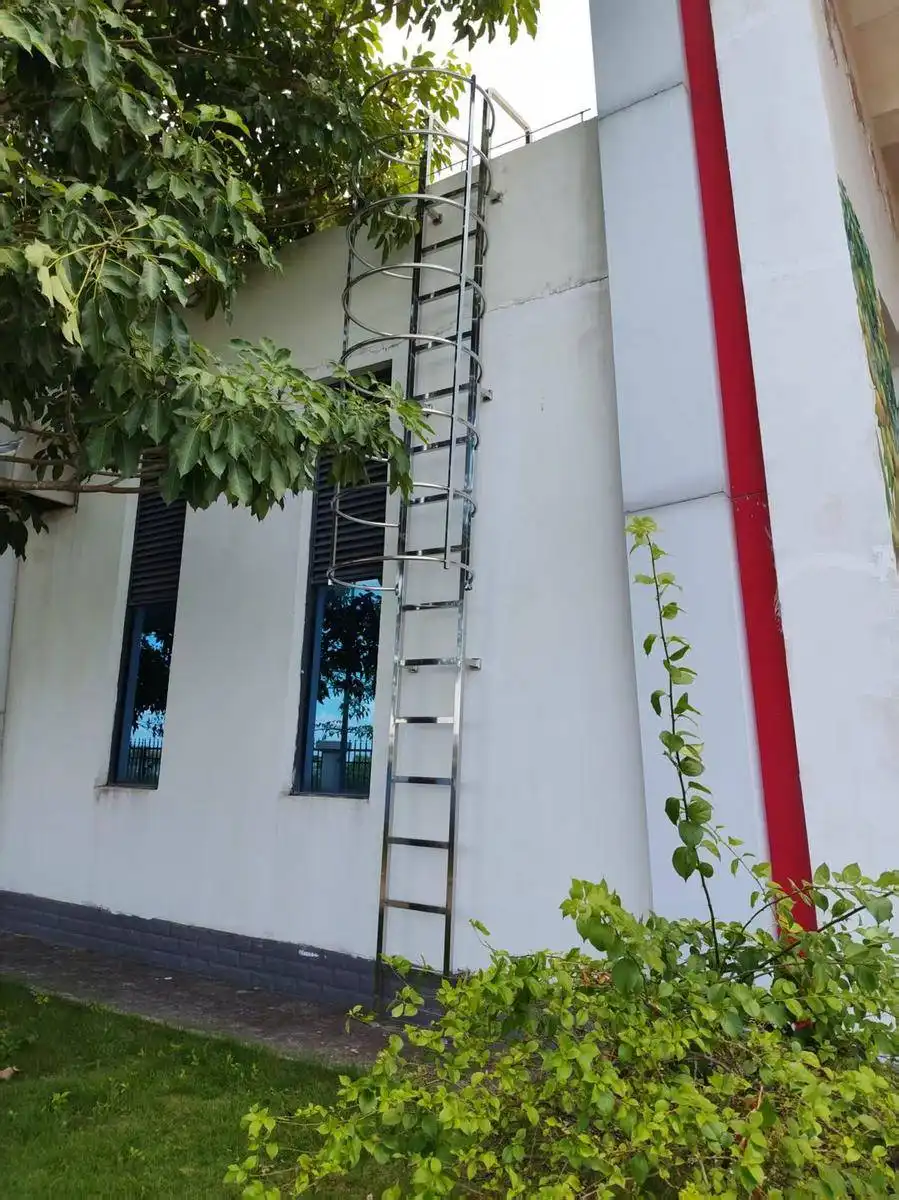
SS316 Marine Grade
Molybdenum-bearing alloy for coastal, chemical and shipboard installations.
SS316L / Electropolish
Low-carbon SS316L with electropolished surfaces for cleanroom and hygienic lines.
Global Shipping & Factory
SS Ladders to 50+ Countries
-
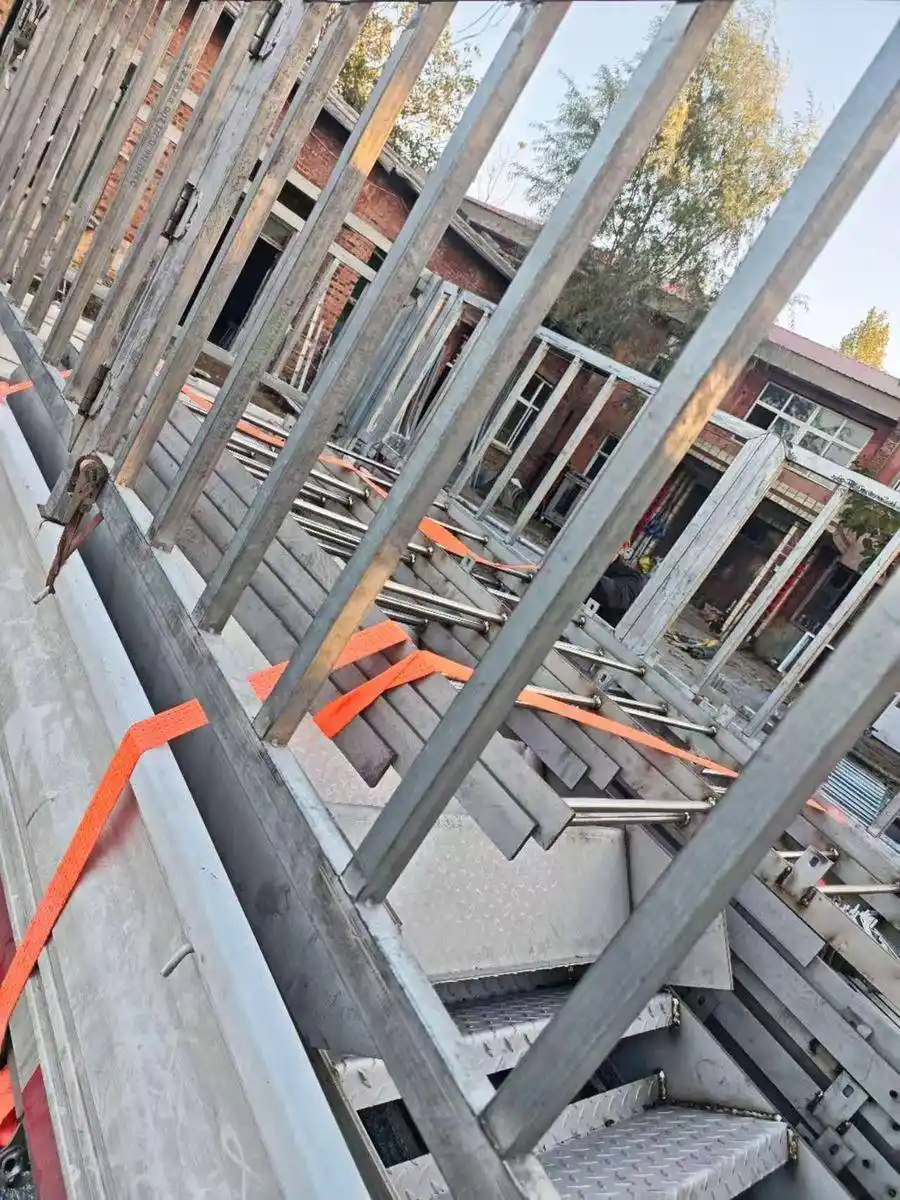
8–12 × 40ft containers shipped per month
-
VCI rust protection + ISPM 15 heat-treated wooden crates
-
EXW / FOB / CIF terms available
-
15–25 business days production lead time
Certifications
Compliance & Documentation
- OSHA 1910.27 — Full Compliance
- EN ISO 14122-4
- BS 4211:2005+A1:2015
- AS 1657
- 100% PMI + MTC 3.1 traceability
Documentation Package
Full stainless traceability file with every order — no extra cost, no paywall.
-
Declaration of Conformity (DoC)
-
MTC 3.1 mill certificates — SS304 / SS316
-
PMI test reports
-
Structural Calculations
-
Passivation & surface treatment records
Factory-Direct Stainless Pricing
Factory-Direct Pricing & 24h Quote
Stainless priced by alloy, weight, and finishing process — with PMI and MTC included, not surcharged.
Custom quotation priced by weight & process. Industry reference: caged ladders ≈ USD 899–1,099/ton.
Common questions
For food, pharma and other hygienic sites where coating damage is a contamination risk - SS304 gives a cleanable, weldable surface with no coating to chip or peel.
SS316 adds 2-3% molybdenum for chloride resistance and is the higher-priced grade; 304 suits general corrosive and hygienic use, 316 for marine, coastal and chemical exposure.
No - every weld is pickled and passivated to restore the protective chromium-oxide film, so the ladder is corrosion-resistant straight from the factory; paint is only for aesthetics.
Roughly 2.5-4× the material cost of Q235B, but with zero repainting and a lower lifecycle cost in corrosive or hygienic environments; we quote per grade.
Brushed (2B or hairline) as standard; mirror polish or electropolishing (Ra ≤ 0.5 µm) on request for food and pharma lines.
Stainless Grade Selection Guide
SS304 vs SS316: Choosing the Right Stainless Steel Fixed Ladder
Both grades are hygiene-friendly, weldable and 100% PMI-checked. The difference is chloride resistance — and that decides whether your ladder lasts 10 years or 50.
| Property | SS304 (18/8) | SS316 |
|---|---|---|
| Composition | 18% Cr / 8% Ni, no molybdenum | 16–18% Cr / 10–14% Ni + 2–3% Mo |
| Relative Cost | $$ (baseline stainless) | $$$ ≈ 1.3–1.5× SS304 |
| Corrosion Resistance | Excellent in fresh water, food, pharma, washdown | Superior in chlorides: marine air, seawater splash, de-icing salt, bleach-based cleaners |
| Pitting Risk | Can pit under sustained chloride exposure | Molybdenum resists pitting and crevice corrosion |
| Best Suited For | Food & beverage, pharmaceutical, brewery, dairy, clean rooms | Coastal plants, offshore, chemical, marine vessels, chlorinated washdown |
| Finish & Treatment | Pickled & passivated, brushed or mirror finish | Pickled & passivated, brushed or mirror finish |
| Documentation | DoC + MTC 3.1 + 100% PMI report | DoC + MTC 3.1 + 100% PMI report |
Surface Treatment
Pickled & Passivated — Why It Matters
- • Pickling removes welding heat tint, scale and embedded iron particles from the surface.
- • Passivation restores the chromium-oxide film that gives stainless its corrosion resistance.
- • Untreated weld zones are the first place stainless starts to tea-stain or pit.
- • Every Dengtai stainless ladder is pickled and passivated after fabrication, then 100% PMI-checked to confirm the ordered grade.
Hygienic Industries
Food, Beverage & Pharma Fit-Out
- • No coating to chip, peel or contaminate product — the metal itself is the finish.
- • Smooth, cleanable surfaces survive daily caustic and sanitizer washdowns.
- • MTC 3.1 mill certificates trace melt and grade for auditor-ready documentation.
- • Rungs, cages and walk-thru handrails can all be supplied in matching SS304 or SS316.
Stainless Grade Questions
Stainless Steel Fixed Ladder FAQs
Whenever chlorides are present: coastal and offshore sites, chemical plants, marine vessels, or washdown with chlorinated/bleach-based cleaners. The 2–3% molybdenum in 316 resists the pitting that 304 eventually suffers in these conditions.
Pickling chemically removes welding heat tint and embedded iron; passivation then rebuilds the protective chromium-oxide film. The result is a ladder that keeps its corrosion resistance at the welds — not just on the virgin sheet.
304/316 are corrosion-resistant, not rust-proof. Surface contamination or carbon-steel particles from tools can cause tea-staining — passivation plus periodic cleaning prevents it. That is why we never grind stainless with carbon-steel wheels.
MTC 3.1 mill certificates trace each batch to its melt and grade; positive material identification verifies every delivered weldment is the grade you ordered. Food, pharma and project specs increasingly require both.
Austenitic 304/316 is essentially non-magnetic. Cold working — bending, forming, rolling — can induce slight magnetism, which is normal and not a quality defect.
Proven in real facilities
Reference projects are shown by industry, country and scale. Client names are available on request with approval.
National utility projects — 15+ countries
23 documented projects, 2021-2025 · 2025
All standardsEnergy & industrial clients — Global
500+ projects since 2004 · 2004-2025
Full compliance docsLargest single order — Malaysia
60 units in one project · 2021
HDGGet Your Stainless Quote
Talk to an Engineer
Free drawing review. Itemized stainless quote in 24 hours. No obligation.
Why Work With Dengtai?
Full Traceability
DoC, MTC 3.1, PMI reports included free.
24-Hour Quote
Engineering review + itemized quote within one day.
Global Delivery
8–12 containers/month. VCI + ISPM 15 packaging.
Request a Stainless Quote
Related Stainless Steel Fixed Ladder Pages
Explore stainless configurations, standards, and resources for your project.
Ship Fixed Ladders
SS316 marine installations and onboard access
Industrial Fixed Ladders
Chemical and process plant access solutions
Cage Fixed Ladders
Safety cage configurations per OSHA 1910.27
OSHA 1910.27
Full OSHA compliance documentation
Fixed Ladder Cost
Alloy-based cost breakdown for stainless ladders
What Is a Fixed Ladder?
Definitions, types & applications