Metal Fixed Ladders · Factory-Direct Since 2004
Fixed Metal
Ladder
Fixed metal ladder in steel or stainless — caged or walk-thru, built to spec with full compliance documentation.
Structural Steel
HDG Coating
Per-Rung Rating
Standard Heights
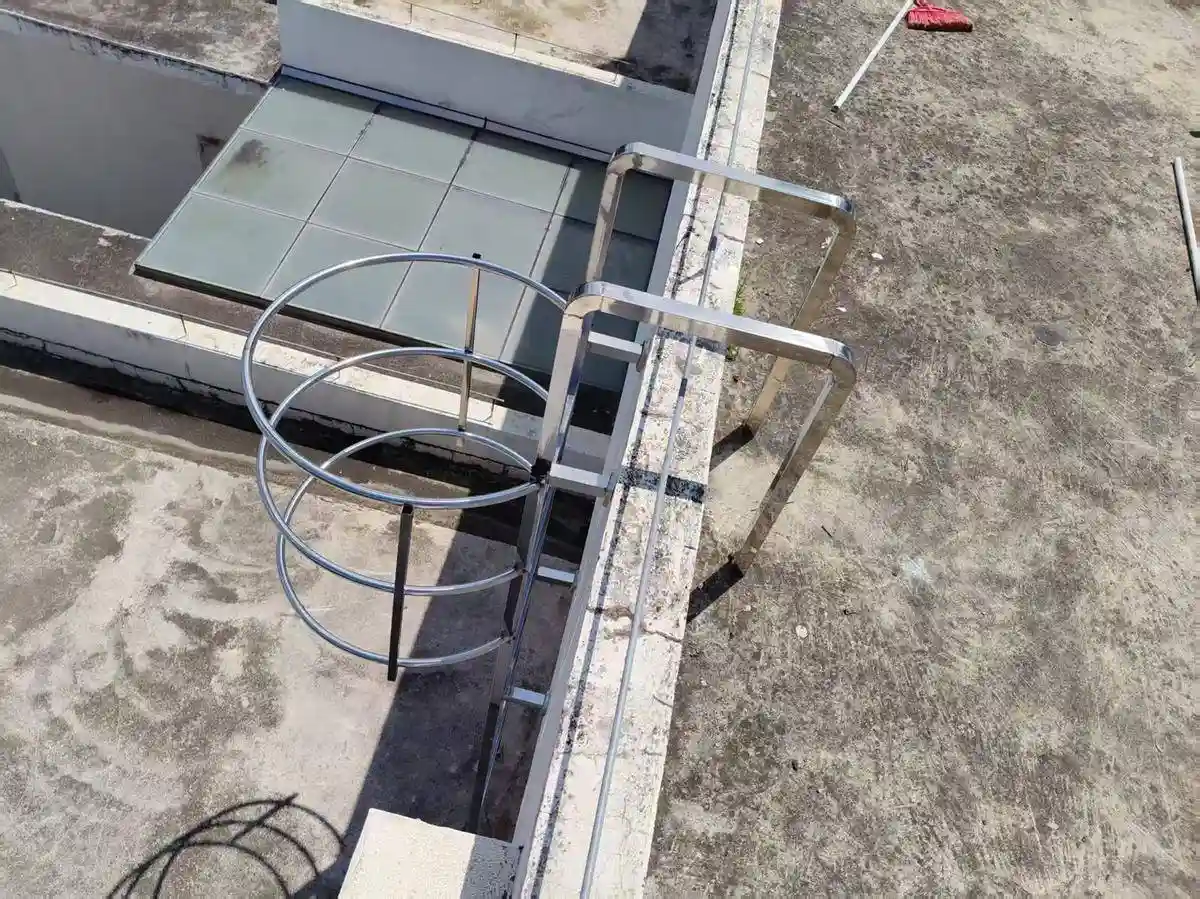
Steel or Stainless
Fixed Metal Ladder, Steel or Stainless
A fixed metal ladder means a steel or stainless build. Galvanized steel for value and durability, stainless for corrosion-grade duty — both caged or walk-thru, both factory-direct with DoCs.
Metal Variants
Fixed Metal Ladder Options & Configurations
Steel and stainless families, each with caged or walk-thru layouts.
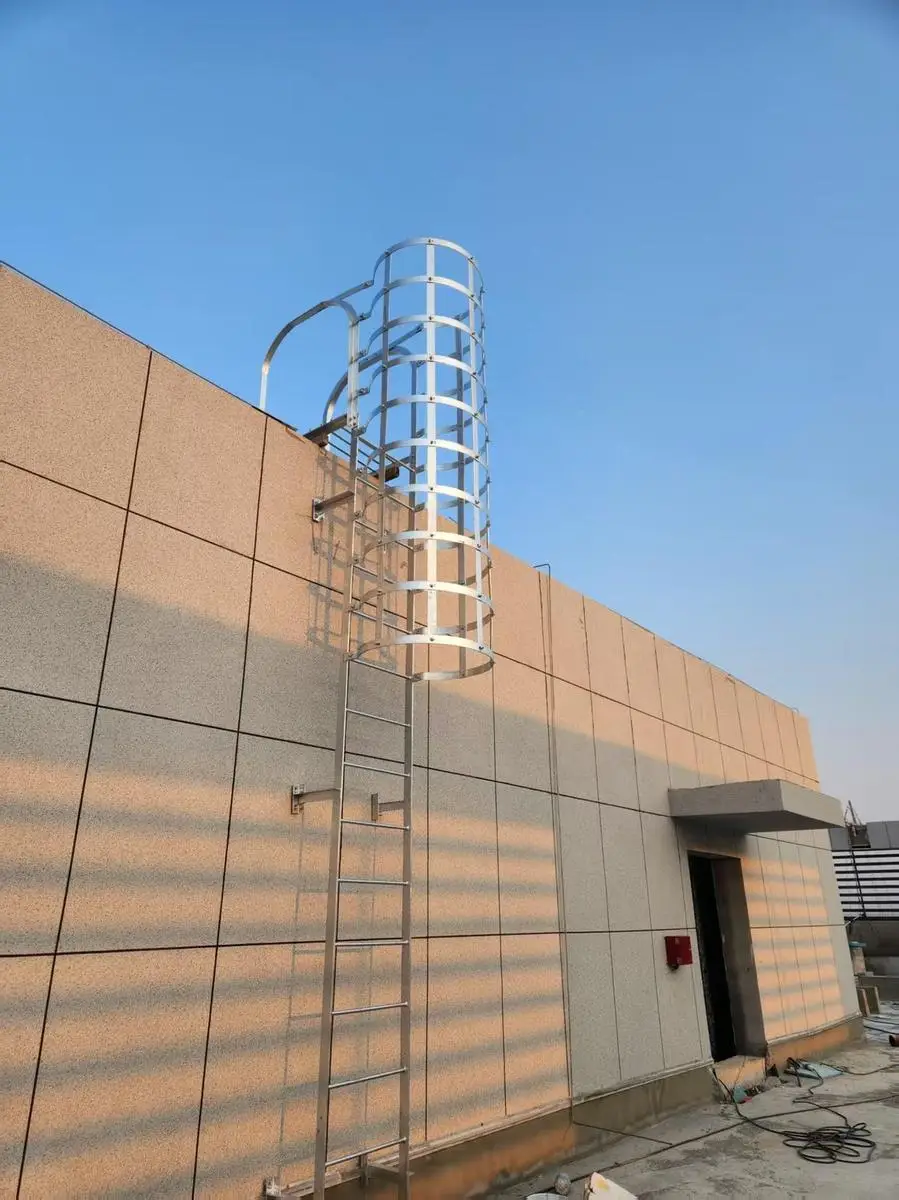
Steel Metal Ladders
Q235B hot-dip galvanized to ISO 1461. The workhorse for industrial exterior runs.
Stainless Metal Ladders
SS304 & SS316, pickled and passivated, 100% PMI checked with MTC 3.1 certs.
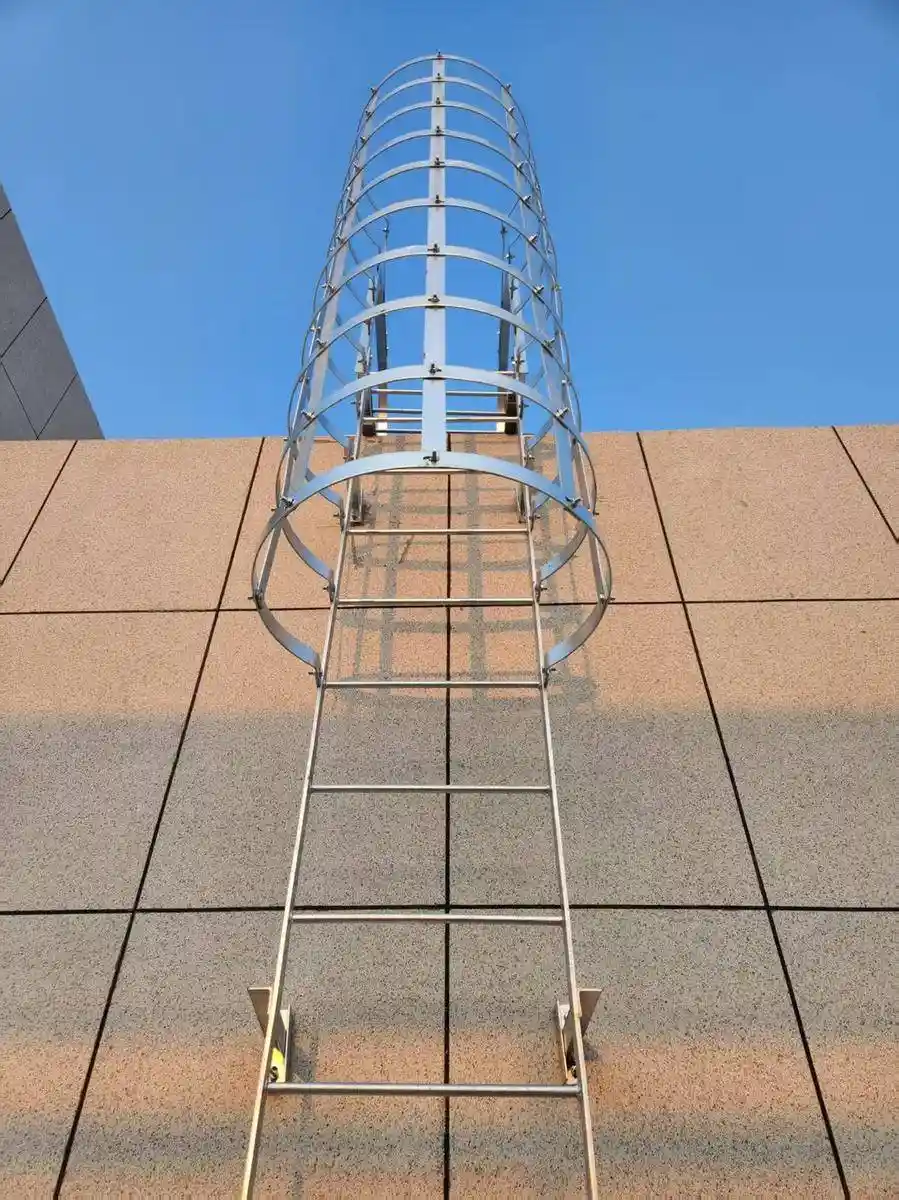
Caged or Walk-Thru
Φ700 mm cage from 7–8 ft, or walk thru handrails for parapet transitions.
Metal Specifications
Fixed Metal Ladder Specifications & Dimensions
Metal ladders are made-to-order from your drawings or ours. Dual-unit load ratings, standard lengths 10–29 ft, custom to 40 ft.
- Load rated 1.5 kN ≈ 337 lbf per rung
- Cage Φ700 mm (27.6″ ID), starts 7–8 ft
- HDG to ISO 1461 or SS pickled & passivated
- PFAS-ready configurations for heights over 24 ft
| Specification | Standard Range | Custom |
|---|---|---|
| Standard Heights | 10 / 12 / 14 / 16 / 18 / 20 / 25 / 29 ft | Up to 40 ft engineered |
| Material | Q235B steel or SS304 / SS316 | Duplex 2205 |
| Rung Diameter | Φ20 mm (0.79″) | Per spec |
| Rung Spacing | 280 mm / 11″ (≤300 mm) | Per project spec |
| Clear Width | 500 mm (19.7″) | Custom width |
| Load Rating | 1.5 kN ≈ 337 lbf per rung | Engineered |
| Cage | Φ700 mm (≈27.6″ ID), starts 7–8 ft | Custom hoops |
| Finish | HDG / pickled & passivated | Powder coat / electropolish |
| Walk-Thru Handrails | Available at top | Per standard |
| Fall Protection | Cage or PFAS | Ladder safety system |
Factory-Direct Metal Pricing
Factory-Direct Pricing & 24h Quote
Steel and stainless quoted side by side, priced by metal weight and fabrication process.
Custom quotation priced by weight & process. Industry reference: caged ladders ≈ USD 899–1,099/ton.
Certifications
Compliance & Documentation
- OSHA 1910.27 — Full Compliance
- ANSI A14.3
- EN ISO 14122-4
- BS 4211:2005+A1:2015
- Cal/OSHA Title 8
Documentation Package
Every metal order ships with complete documentation — no extra cost, no paywall.
-
Declaration of Conformity (DoC)
-
Material Test Certificates — EN 10204 3.1
-
Structural Calculations
-
Welding Procedure Specifications
-
Surface treatment certificates (HDG / passivation)
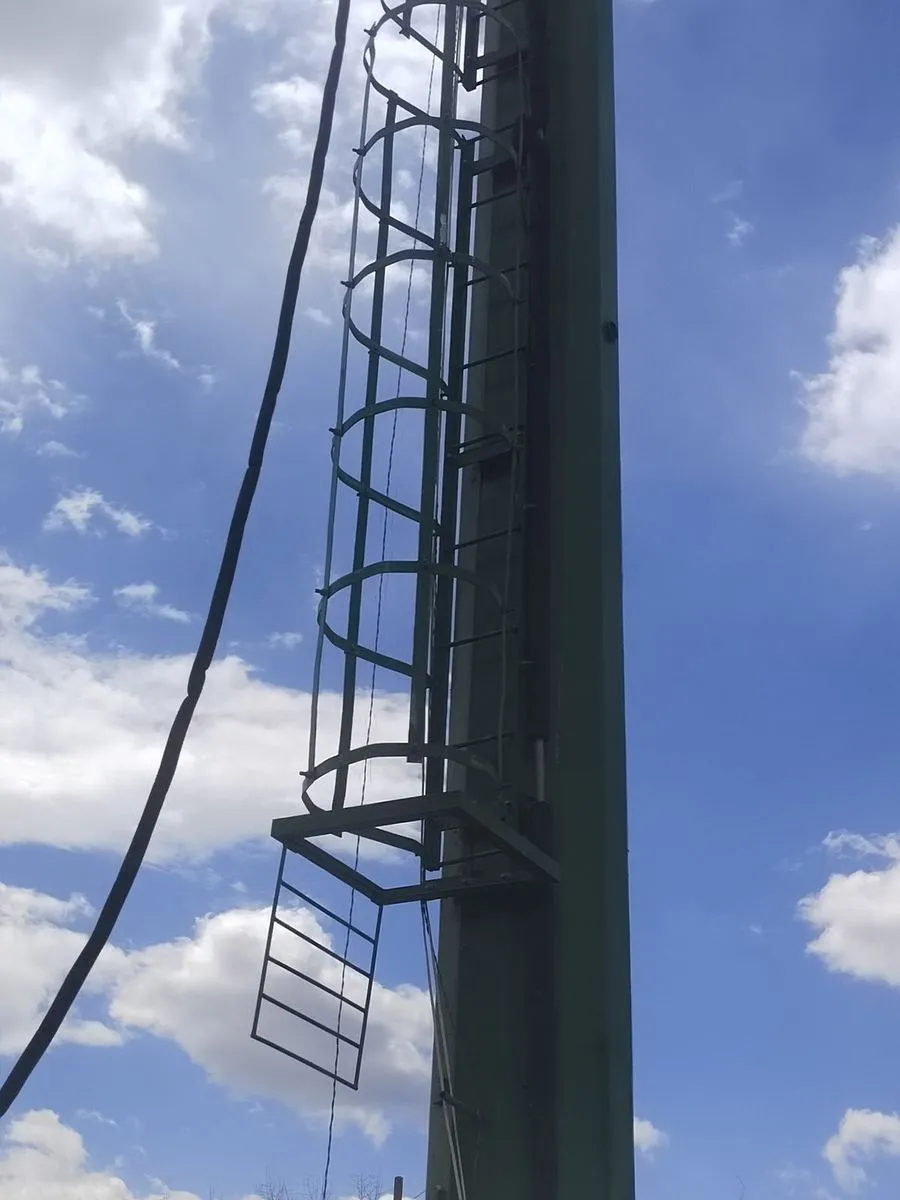
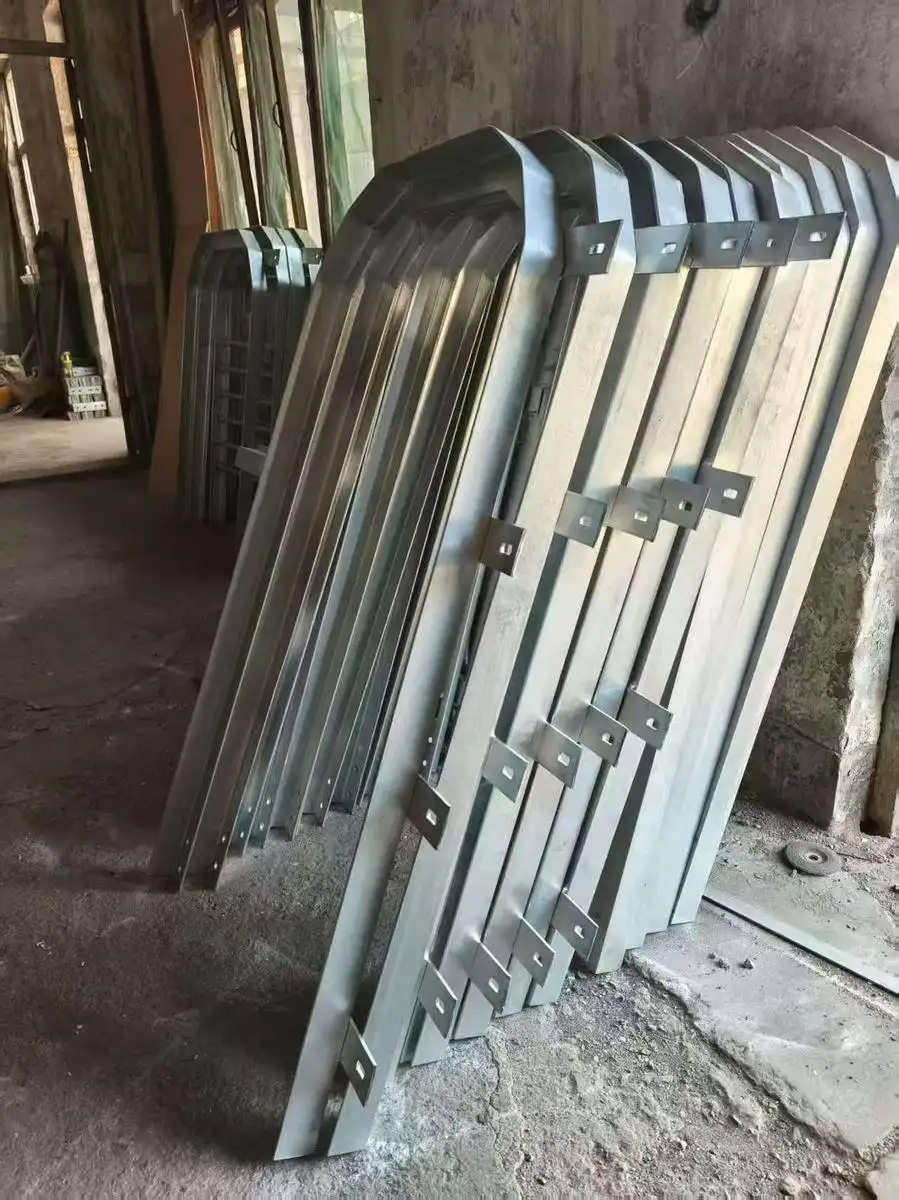
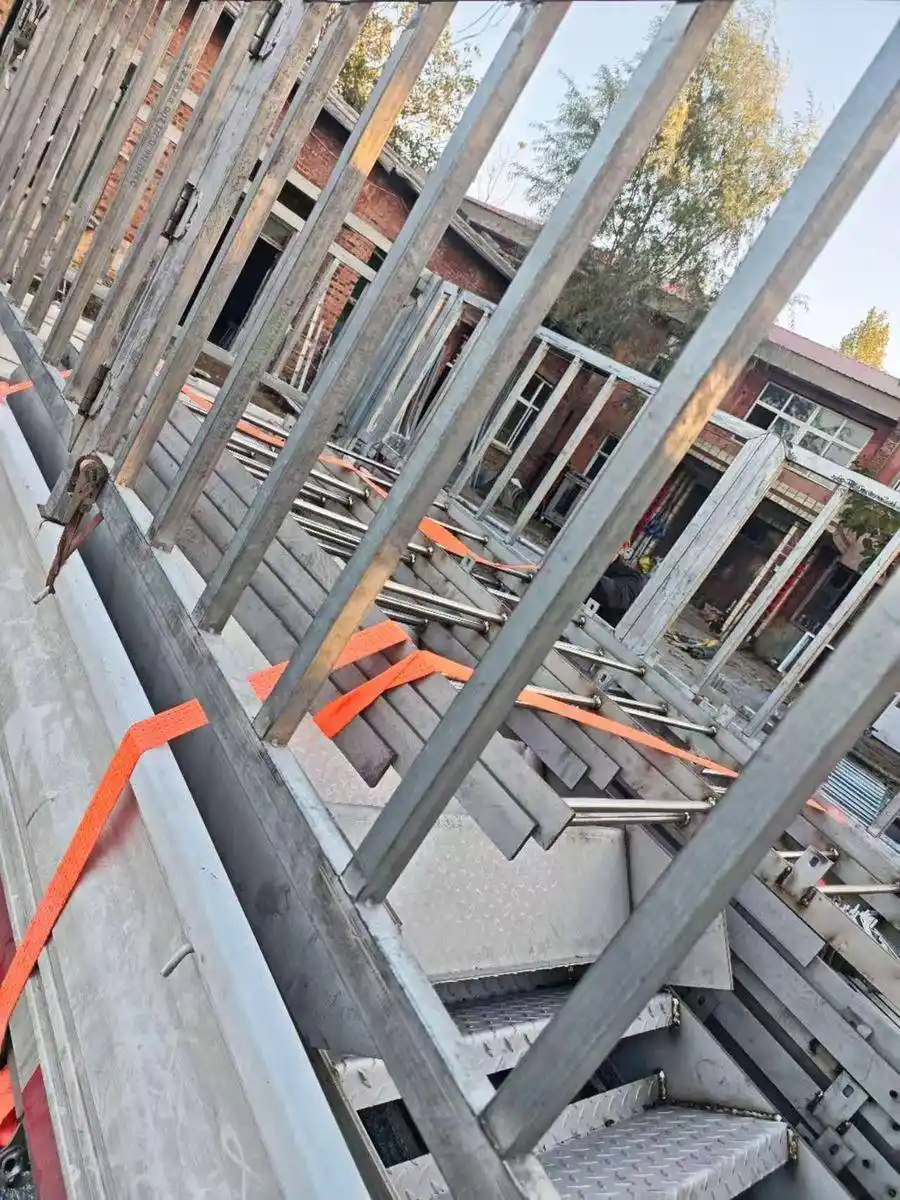
Global Shipping & Factory
Metal Ladders to 50+ Countries
-
8–12 × 40ft containers shipped per month
-
VCI rust protection + ISPM 15 heat-treated wooden crates
-
EXW / FOB / CIF terms available
-
15–25 business days production lead time
Common questions
10, 12, 14, 16, 18, 20, 25 and 29 ft standard lengths — and any custom height with structural calcs supplied.
Φ20 mm rungs at 280 mm pitch (≈11 in) and 500 mm clear width (≈20 in) — inside OSHA's 10–14 in spacing band.
OSHA 1910.27, ANSI A14.3 and EN ISO 14122-4, with DoC, MTC 3.1 and structural calcs shipped with every order.
1.5 kN (≈337 lbf) per rung on the standard build, verified by structural calculation for custom heights.
15–25 working days after drawing approval; ladders are pre-assembled and trial-fitted before shipment.
Metal Ladder Materials: Steel, Stainless & Aluminum Compared
All three metal systems share the same engineering baseline — 1.5 kN ≈ 337 lbf per rung, Φ20 mm rungs at 280 mm pitch, and DoC + structural calcs with every order. They diverge in the one thing that decides a 10–30 year asset: the corrosion strategy. Carbon steel buys protection as a coating, stainless steel builds it into the alloy, and aluminum trades stiffness for weight. This is the engineering behind that trade, in real numbers.
Three Metal Systems, Three Protection Strategies
Q235B Carbon Steel + HDG
The Sacrificial Coating System
- • Yield ≥ 235 MPa (GB/T 700, ≈ ASTM A36) — the strength benchmark every other grade is compared to.
- • Protection is a zinc layer, not the alloy: zinc corrodes first and shields the steel beneath (ISO 1461, 85–100 µm; 140 µm for C4–C5 coastal duty).
- • Cheapest per installed metre — the value king of the three.
- • The galvanizing bath takes single runs up to 14 m in one dip — no field joints on tall ladders.
- • Toughest under impact: it dents instead of cracking, and a damaged coating is a local touch-up, not a failure.
SS304 / SS316 Stainless
The Self-Passivating Alloy
- • ≥ 10.5% chromium forms a self-healing Cr₂O₃ passive film — scratches re-passivate in air, nothing to repaint.
- • SS304 owns hygiene and fresh-water duty; SS316 adds 2–3% molybdenum to fight chlorides.
- • No coating to wear out — pickling restores the passive film after welding and fabrication.
- • 100% PMI-tested per coil against mix-up; MTC 3.1 traceable to the TISCO mill certificate.
- • Costs 2.5–4× steel — you pay for corrosion resistance built into the alloy itself.
6061-T6 Aluminum
The Age-Hardened Lightweight
- • T6 = solution heat-treated + artificially aged: 276 MPa yield, the highest of the three grades.
- • 2.70 g/cm³ — one third of steel's density on paper.
- • But E ≈ 69 GPa, one third of steel's modulus: deflection sizes the section, not strength.
- • Finished by anodizing (5–25 µm) or powder coat — it cannot be hot-dip galvanized (the ≈450 °C zinc bath damages the alloy).
- • Loses strength above ~100 °C, and standard extrusions carry no MTC 3.1 mill traceability.
Surface Finish Comparison: HDG vs Anodizing vs Pickling
| Finish | Process | Coating Thickness | Service Life | Cost | Best For |
|---|---|---|---|---|---|
| Hot-Dip Galvanizing (HDG) | Zinc bath, metallurgical bond to steel (ISO 1461) | 85–100 µm local/avg; 140 µm C4–C5 marine | 50+ years in C3 industrial air (ISO 14713-1) | $ | Outdoor & industrial default |
| Anodizing | Electrochemical oxide layer grown on aluminum | 5–25 µm | 15–25 years outdoors with basic care | $$ | Aluminum: indoor, light outdoor, appearance |
| Pickling & Passivation | Acid removes free iron, restores the Cr₂O₃ passive film | Monomolecular film — no coating to wear out | As long as the base alloy | $$ (inside alloy price) | Stainless: food, pharma, coastal, chemical |
Electropolishing (Ra ≤ 0.5 µm, GMP-grade) is available on stainless for pharma and beverage washdown lines. The rule of thumb: if the environment can kill a coating, buy the alloy; if a coating outlives the asset, buy the coating.
Mechanical Comparison in Real Numbers
| Property | Q235B Carbon Steel | SS304 / SS316 | 6061-T6 Aluminum |
|---|---|---|---|
| Density | 7.85 g/cm³ (1.0×) | ≈ 7.93 g/cm³ | 2.70 g/cm³ (0.34×) |
| Yield Strength | ≥ 235 MPa | ≥ 205 MPa | 276 MPa |
| Elastic Modulus | ≈ 210 GPa (1.0×) | ≈ 193 GPa | ≈ 69 GPa (0.33×) |
| Cost Index (per installed ladder) | 1.0× — the benchmark | 2.5–3× (304) / 3.5–4× (316) | ≈ 1.5–2× (per kg it is 2–3× steel) |
| Deflection Behaviour | Stiffest — smallest sections for the span | Nearly as stiff | Needs ≈3× the moment of inertia for equal deflection |
The modulus column is the one most buyers skip. At equal load and span, deflection is inversely proportional to stiffness (E × I) — so a load-rated aluminum ladder must be built with roughly three times the section's moment of inertia to match steel. That thicker wall eats into the weight saving: a compliant 6061-T6 ladder weighs about half of steel, not a third. Light, yes — but not as light as the density number alone suggests.
Environment-to-Material Matrix
| Site Environment | Recommended Material | Why |
|---|---|---|
| Inland / general industrial | Q235B HDG (85–100 µm, ISO 9223 C3) | Zinc coating matches the corrosivity class; 50+ year life at 1× cost |
| Coastal / marine | SS316 — or HDG at 140 µm (C4–C5) | Chlorides pit SS304 and consume zinc fast; molybdenum-bearing 316 resists both |
| Chemical / chloride process | SS316 | 2–3% Mo plus the passive film survive acids, caustics and chlorides |
| Food / beverage / pharma | SS304, pickled (electropolish optional) | No coating to flake into product; Ra ≤ 0.5 µm washdown surface |
| Low temperature (≤ −20 °C) | SS304/316 — or Q345B for carbon steel | Austenitic stainless has no ductile-brittle transition; Q235B impact is only guaranteed at +20 °C |
Selection Method: Load → Environment → Budget → Maintenance
Step 1 · Load
1.5 kN Is the Floor, Not the Ceiling
High traffic, impact or repeated abuse? Steel and stainless hold the rating indefinitely; aluminum needs thicker sections and still dents. Confirm the duty cycle before the grade.
Step 2 · Environment
Corrosion Is the Only Early Killer
Map the site: coastal, chemical, washdown, or plain industrial air? That one answer usually names the grade — see the matrix above.
Step 3 · Budget
Compare Life-Cycle Cost, Not Sticker Price
A 50-year HDG ladder at 1× beats a cheap repaint cycle; stainless pays back where replacement or downtime is expensive. Total cost of ownership is the number that matters.
Step 4 · Maintenance
Who Maintains It?
No crew on site and no coating program? SS316 removes the maintenance line item entirely. A plant that already manages coatings? HDG steel saves the capital. The decision table below turns these four answers into a grade.
Three Myths That Cost Money
Myth 1
"The Pricier the Material, the Better"
SS316 inside an inland warehouse delivers nothing HDG steel doesn't — you pay 3.5–4× for corrosion resistance you never use. Match the alloy to the corrosivity class, not to the budget ceiling.
Myth 2
"Aluminum Is Always Lighter"
Only at equal volume. The 69 GPa modulus forces thicker sections to hold the 1.5 kN deflection limit, so a compliant 6061-T6 ladder weighs about half of steel — still lighter, but you pay in section size and price, and above ~100 °C it loses strength entirely.
Myth 3
"Stainless Steel Is Maintenance-Free"
SS304 pits in chlorides and tea-stains in coastal air; welding destroys the passive film locally until it is pickled. SS316 exists precisely because stainless needs the right grade and periodic cleaning — it is low-maintenance, not no-maintenance.
Send your site photos, drawings or a corrosion class and our engineers will spec the grade — not just a price. Free drawing review, quote within 24 hours.
Get a Material RecommendationMetal Material Decision Guide
Metal Fixed Ladder Materials: One Decision Table
Steel, stainless or aluminum — the right metal fixed ladder is decided by four questions: environment, load, compliance and budget. This table answers all four at a glance.
| Decision Factor | Q235B Steel (HDG) | SS304 Stainless | SS316 Stainless | 6061-T6 Aluminum |
|---|---|---|---|---|
| Relative Cost | $ | $$ ≈ 2.5–3× | $$$ ≈ 3.5–4× | $$ |
| Corrosion Resistance | Good — via 85–100 µm HDG (ISO 1461) | Excellent — fresh water, food, pharma | Superior — chlorides, marine, chemical | Good in air; poor against chlorides/alkalis |
| Strength & Toughness | ≥235 MPa yield; toughest under impact | ≥205 MPa yield | ≥205 MPa yield | 276 MPa yield but loses strength >100 °C |
| Weight | Heavy (7.85 g/cm³) | Heavy | Heavy | Light (2.70 g/cm³, ≈1/3 steel) |
| Fire Behaviour | Non-combustible | Non-combustible | Non-combustible | Melts ≈660 °C |
| Documentation | DoC + structural calculation | DoC + MTC 3.1 + PMI | DoC + MTC 3.1 + PMI | DoC |
| Typical Applications | General industrial, roof access, warehousing, HVAC | Food, beverage, pharma, breweries, washdown | Coastal, offshore, chemical, marine | Light indoor access, weight-sensitive mounting |
How to Choose
Four Questions, One Answer
- • Environment first: coastal or chemical? Go SS316. Wet and hygienic? SS304. Normal industrial air? Q235B HDG.
- • Load next: all Dengtai metal ladders rate 1.5 kN ≈ 337 lbf per rung — steel and stainless hold it indefinitely, aluminum needs thicker sections.
- • Compliance: projects requiring MTC 3.1, PMI or structural calcs are served by steel and stainless — never guess with undocumented materials.
- • Budget last: HDG steel is the value default; stainless pays back where corrosion or hygiene would otherwise force replacement.
Mixed-Material Builds
Steel Rungs, Stainless Cage — Yes, It Works
- • Hybrid ladders (e.g. Q235B structure + SS304 cage or walk-thru) balance budget with corrosion-critical parts.
- • Dissimilar metals are isolated with insulating washers to stop galvanic corrosion.
- • Every hybrid is still fully load-rated, OSHA 1910.27 / ANSI A14.3 / BS 4211 / EN ISO 14122-4 compliant and documented.
- • Tell us the corrosive zones and we will draw the material split for you — free drawing review included.
Material Selection Questions
Metal Fixed Ladder FAQs
It depends on the site. Q235B HDG suits general industrial, SS304 suits food and pharma, SS316 suits marine and chemical environments. Send your site conditions and we will spec the grade.
Q235B is carbon steel that needs hot-dip galvanizing (85–100 µm); SS304 and SS316 are stainless with inherent corrosion resistance; SS316 adds 2–3% molybdenum to resist chlorides. Cost rises in that order.
Yes. Hybrid builds are common for budget and corrosion balance. We isolate dissimilar metals with insulating washers so galvanic corrosion cannot develop at the joints.
SS316 — no coating, no repainting, and it survives chlorides that attack other grades. HDG steel needs no maintenance for decades in normal industrial air; aluminum needs anodizing or powder coating to stay protected outdoors.
Send your drawing or site photos through the quote form — an engineer replies within 24 hours, and the drawing review is free. You will get a grade recommendation, not just a price.
Proven in real facilities
Reference projects are shown by industry, country and scale. Client names are available on request with approval.
National utility projects — 15+ countries
23 documented projects, 2021-2025 · 2025
All standardsEnergy & industrial clients — Global
500+ projects since 2004 · 2004-2025
Full compliance docsLargest single order — Malaysia
60 units in one project · 2021
HDGGet Your Metal Quote
Talk to an Engineer
Free drawing review. Itemized metal quote in 24 hours. No obligation.
Why Work With Dengtai?
Full Compliance Docs
DoC, MTC, structural calcs included free.
24-Hour Metal Quote
Engineering review + itemized quote within one day.
Global Delivery
8–12 containers/month. VCI + ISPM 15 packaging.
Request a Metal Quote
Related Fixed Metal Ladder Pages
Explore metal configurations, standards, and resources for your project.
Steel Fixed Ladders
Galvanized steel metal ladder line
Stainless Steel Ladders
Corrosion-grade SS304 & SS316 metal line
Cage Fixed Ladders
Safety cage configurations per OSHA 1910.27
Walk-Thru Fixed Ladders
Walk thru handrails for parapet access
OSHA 1910.27
Full OSHA compliance documentation
Fixed Ladder Cost
Weight-based cost breakdown for metal ladders