Factory-Direct Since 2004
Types Of
Fixed Ladders
Rail, individual-rung, side-step, through and caged fixed ladders — we build every type. Same Φ20 mm rungs, 280 mm pitch, 500 mm width, 1.5 kN rated.
The Five Fixed Ladder Types
Types Of Fixed Ladders
Each type solves a different access problem. Match the type to your structure and landing, and the rest of the spec stays standard.
The main types are side-rail (rail) ladders, individual rung ladders, side-step ladders, through ladders, and caged fixed ladders. The first two are the OSHA 1917.118 vocabulary — a rail ladder has two stiles, an individual rung ladder fixes its rungs straight into the structure.
A side-rail (or rail) fixed ladder has two stiles with rungs between them, mounted on standoff brackets. It is the most common type for roof, tank and mezzanine access, and it is what we ship for 80% of projects — Φ20 mm rungs at 280 mm pitch, 500 mm clear width.
An individual rung ladder is a fixed ladder with no side rails — the rungs are fixed directly into the structure. Per OSHA 1917.118 it is its own type, and it suits tank shells and tight enclosures where rail standoff would not fit. Rungs still hold the 1.5 kN rating.
A side-step fixed ladder is designed for lateral transfer — the climber steps off the side onto a platform rather than walking through the top. It is common where the access landing sits beside the ladder, and the rung profile is set to make the side step safe and natural.
A through fixed ladder extends through the top opening so the climber walks through the rungs onto the landing. It needs the opening sized to the ladder — our through configuration is built with the platform and hatch matched to the same 500 mm clear width.
A caged fixed ladder adds a Φ700 mm safety cage starting at 2.2 m (7–8 ft) above the base, with hoops and verticals welded to the stiles. It is the traditional fall protection for vertical runs — though over 24 ft on a new install, OSHA now wants a PFAS or ladder safety system.
Send us the structure, the landing position and the height. Side-rail for most wall and column access, individual-rung where rails do not fit, side-step or through for platform transfers, and a cage or PFAS above the fall-protection threshold. We quote the type that matches your access path — free drawing review, 24h quote.
Types Of Fixed Ladders at a Glance
The Five Builds We Offer
Same rung data and compliance package on every type — the difference is how the climber gets on and off.
Side-Rail
Two stiles, rungs between. The default for wall and column access.
Individual-Rung
Rungs fixed into the structure — no rails. OSHA 1917.118 type.
Side-Step
Step off the side onto a platform beside the ladder.
Through
Walk through the rungs onto the top landing opening.
Caged
Φ700 mm cage from 2.2 m — classic vertical fall protection.
Types Of Fixed Ladders in Depth
Types Of Fixed Ladders Options & Configurations
The most-ordered types as dedicated configurations — each with its own landing and fall-protection detail.
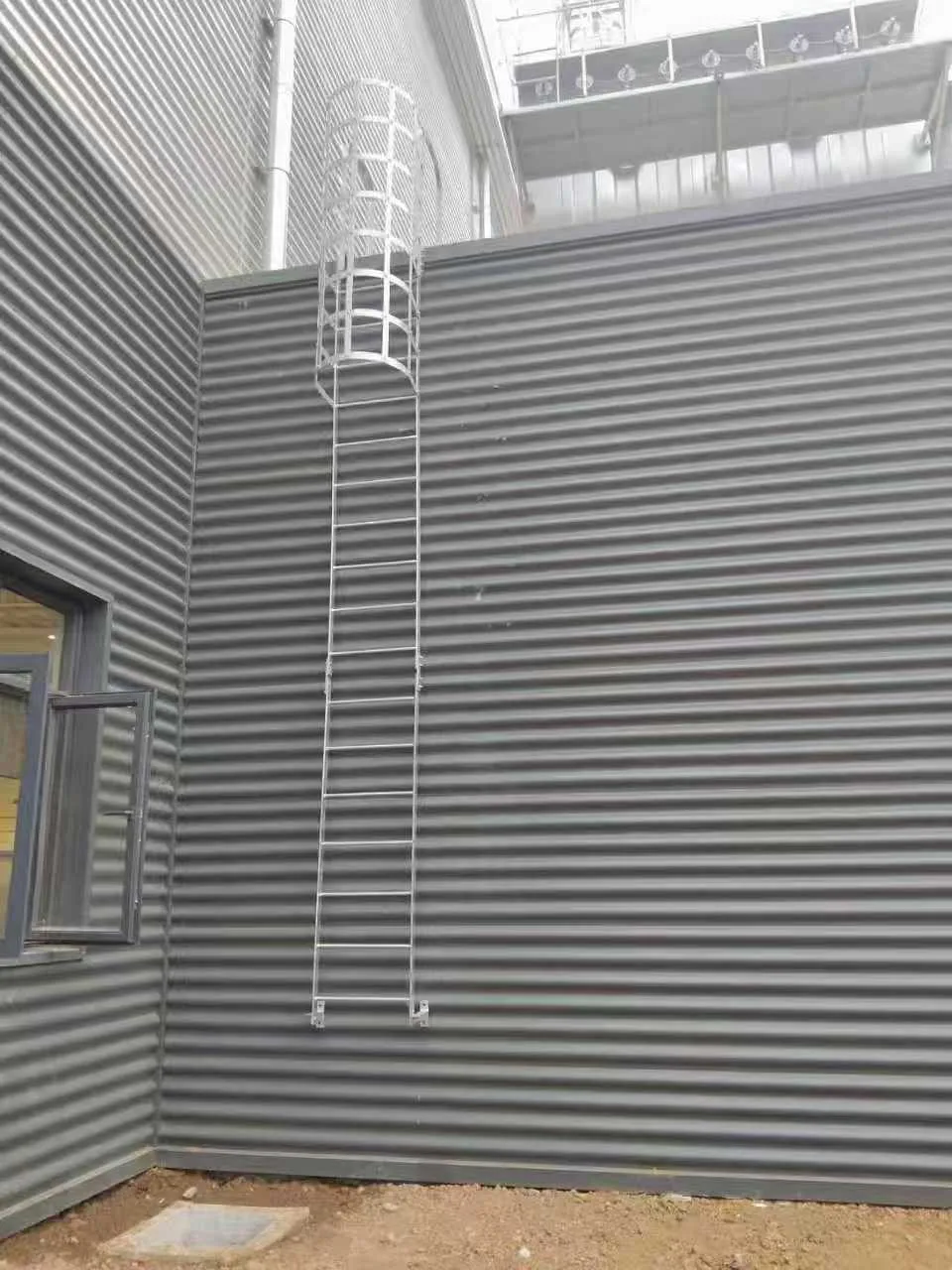
Walk-Thru Type
A walk-thru platform replaces the top rungs — the climb ends in a safe step onto the landing.
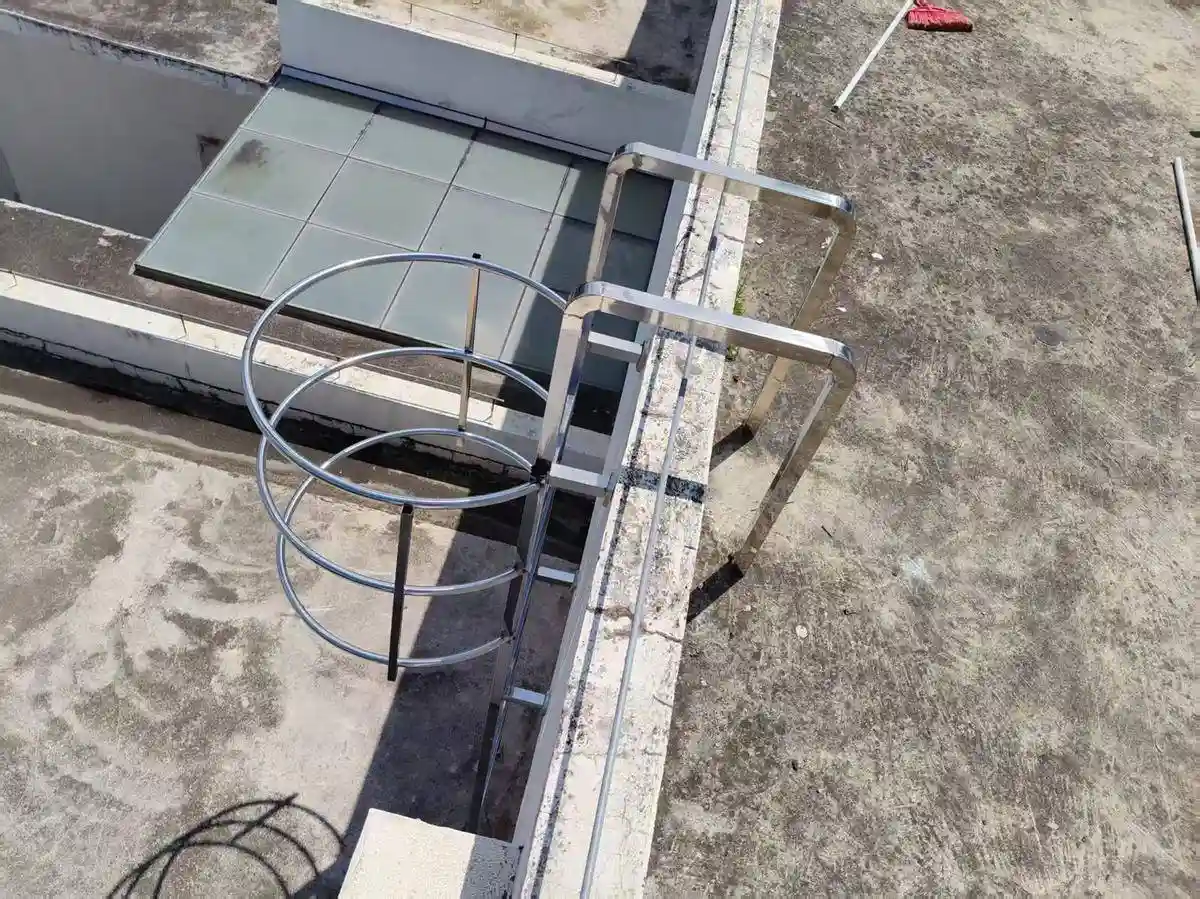
Through Type
Rungs carry through the roof or floor opening — the climber steps through, not over.
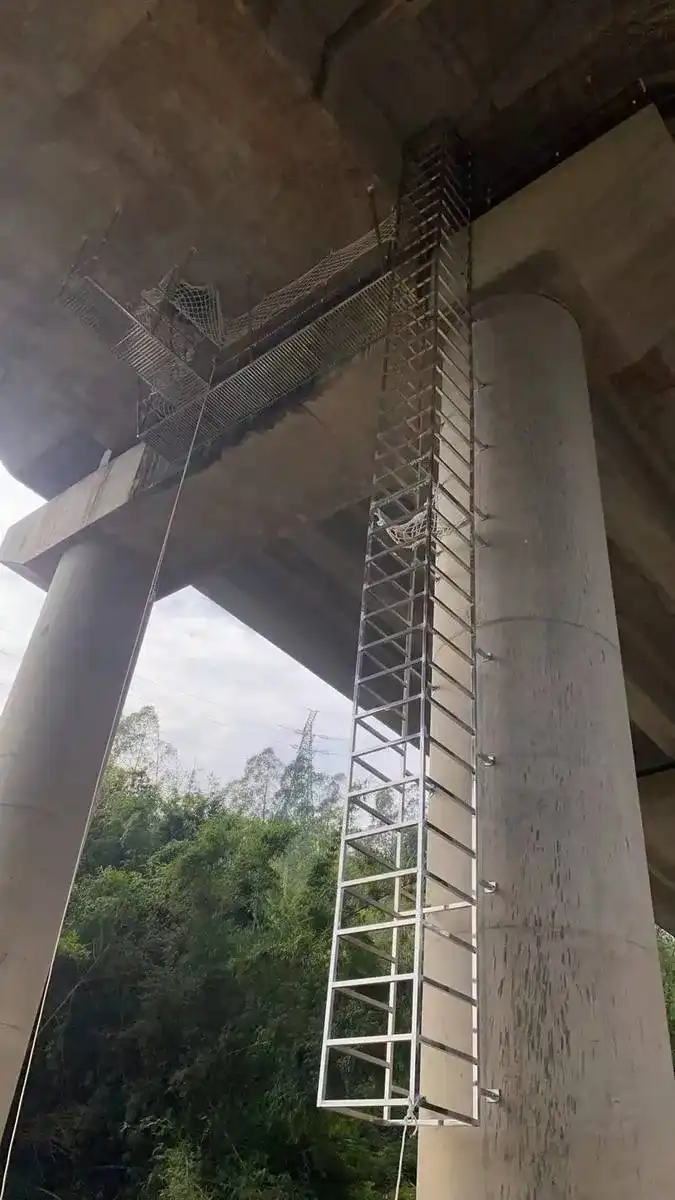
Caged Type
The Φ700 mm cage configuration for vertical runs — hoops, verticals and base bell all included.
Certifications
Compliance & DoCumentation (OSHA/BS 4211/EN ISO 14122-4)
- OSHA 1910.27 — Full Compliance
- BS 4211:2005+A1:2015
- EN ISO 14122-4
- AS 1657
- Cal/OSHA Title 8
Documentation Package
Every order ships with complete documentation — no extra cost, no paywall.
-
Declaration of Conformity (DoC)
-
Material Test Certificates — EN 10204 3.1
-
Structural Calculations
-
Welding Procedure Specifications
-
Surface treatment certificates (HDG per ISO 1461)
Specifications
Types Of Fixed Ladders Specifications & Dimensions
Whatever the type, the core dimensions hold. Standard heights 10–25 ft, custom engineering up to 40 ft, full compliance docs included.
| Specification | Standard Range | Custom |
|---|---|---|
| Height | 10 – 25 ft (3 – 7.6 m) | Up to 40 ft engineered |
| Material | Q235B / SS304 / SS316 | Duplex / 6063-T5 AL |
| Rung Diameter | Φ20 mm (0.79″) | Per spec |
| Rung Spacing | 280 mm / 11″ (≤300 mm) | Per project spec |
| Clear Width | 500 mm (19.7″) | Custom width |
| Cage Diameter | Φ700 mm (27.5″) | Custom |
| Load Rating | 1.5 kN per rung (≈337 lbf) | Engineered |
| HDG Thickness | 85 – 100 μm (ISO 1461) | Heavier coating |
| Finish | HDG / Pickled / Painted | Electropolish (SS) |
| Fall Protection | Cage or PFAS | Ladder safety system |
Factory-Direct Pricing
Factory-Direct Pricing & 24h Quote
Every type is quoted the same way — material weight, machining, welding, finishing, packaging. The type changes the steel, not the transparency.
Custom quotation priced by weight & process. Industry reference: caged ladders ≈ USD 899–1,099/ton.
Common questions
Wall ladders suit flat wall access, caged ladders climbs over 24 ft, walk-through serves hatch landings, well-enclosed fits shafts, individual-rung is the retrofit option — send your drawing and we confirm.
Vertical wall ladders with a cage or PFAS — the standard access for roof hatches and plant rooms, in Q235B steel or stainless.
Q235B steel, SS304/SS316 and 6063-T5 aluminum, with HDG 85–100 μm, pickled or painted finishes — same Φ20 mm rung core.
Yes — DoC, MTC 3.1 and structural calcs with every order, engineered to OSHA 1910.27, BS 4211 or EN ISO 14122-4.
Yes — cage hoops are removable and a PFAS rail can be retrofitted later, with recalculated fixings supplied.
Types of Fixed Ladders
Types of Fixed Ladders — 5-Way Comparison
Five configurations cover almost every fixed ladder job. Choose by climb height, fall protection requirement, and the space you have at the top and bottom.
| Type | Configuration | Typical Height | Fall Protection | Best For |
|---|---|---|---|---|
| 1. Vertical wall ladder | Rungs between side rails, wall-mounted with 8 mm standoff brackets | ≤24 ft (7.3 m) | None required below 24 ft; PFAS rail optional | Roof access, plant rooms, low climbs |
| 2. Caged ladder | Vertical ladder inside a Φ700 mm hoop cage, start at 2.2 m | >24 ft (existing installs) | Cage (legacy) — PFAS required for new >24 ft | Existing plants, tanks, silos, where cage is specified |
| 3. Walk-through ladder | Ladder with side-rail extension and opening to a landing or hatch | 10 – 40 ft | Rail extension 42″ above landing | Roof hatches, platforms, equipment access |
| 4. Well-enclosed ladder | Ladder inside a 27–30 in enclosure (well) with rest platforms | >24 ft | Well enclosure + platform every 150 ft max | Chimneys, shafts, confined access routes |
| 5. Through / cat ladder | Ladder passing through a floor with guard opening, or short access steps | Up to 10 ft per section | Opening guards at floor level | Manholes, mezzanines, utility shafts |
All five types share the same fabrication data: Φ20 mm rungs at 280 mm pitch, 500 mm clear width, 1.5 kN rung rating, HDG 85–100 µm or stainless. Mix them — caged lower section, walk-through top, PFAS rail — in one quote.
Types of Fixed Ladders — FAQ
Vertical wall ladders, caged ladders, walk-through ladders, well-enclosed ladders, and through/cat ladders — each matched to climb height and fall protection needs.
Historically above 24 ft where a cage was specified; on new installations OSHA now requires a personal fall arrest system above 24 ft, so cages serve existing plants and legacy specs.
A ladder whose side rails extend 42″ above the landing so you step through between the rails — common at roof hatches and platform edges.
A cage is open hoops (Φ700 mm) around the climber; a well is a solid 27–30 in enclosure. Both are accepted fall protection on legacy ladders.
Yes — for example a caged lower section with a walk-through top and a PFAS rail, all built as one unit with a single DoC and structural calculation.
Proven in real facilities
Reference projects are shown by industry, country and scale. Client names are available on request with approval.
National utility projects — 15+ countries
23 documented projects, 2021-2025 · 2025
All standardsEnergy & industrial clients — Global
500+ projects since 2004 · 2004-2025
Full compliance docsLargest single order — Malaysia
60 units in one project · 2021
HDGGet Your Quote
Talk to an Engineer
Free drawing review. Itemized quote in 24 hours. No obligation.
Why Work With Dengtai?
Full Compliance Docs
DoC, MTC, structural calcs included free.
24-Hour Quote
Engineering review + itemized quote within one day.
Global Delivery
8–12 containers/month. VCI + ISPM 15 packaging.
Request a Quote
Related Types Of Fixed Ladders Pages
Explore each type and the configurations that match your landing.
Walk-Thru Fixed Ladders
Platform top configuration with safe landing egress
Through Fixed Ladders
Rungs carry through the opening to the landing
Cage Fixed Ladders
Φ700 mm safety cage configurations
Fixed Ladders with Platform
Rest platforms and walk-thru top detail
Fixed Ladder Parts
Side rails, rungs, standoff brackets and cage options
Compliance Standards
OSHA, BS 4211, EN ISO 14122-4 and AS 1657