Factory-Direct Since 2004
Are Fixed Ladders
Permanently Attached?
Yes. A fixed ladder is bolted or welded to the structure with steel standoff brackets — it is non-self-supporting and non-adjustable by definition. Here is exactly how the attachment works.
The Attachment Question, Answered
Are Fixed Ladders Permanently Attached
How a fixed ladder is fastened, what carries the load, and what that means when you plan a relocation.
Yes — by definition. The ALI definition of a fixed ladder is a ladder that is permanently attached to a structure, non-self-supporting and non-adjustable in length. It is bolted or welded into place rather than leaned or moved, which is exactly what separates it from a portable ladder.
Steel standoff brackets hold the ladder away from the wall at the designed clearance — 8 mm plate brackets on standard builds. They bolt to structural steel or concrete with anchors, at a spacing set by the load calc. The bracket spacing and anchor size go into the structural calculations that ship with the order.
Bolt-on ladders can be unbolted and relocated — that is the advantage of bracket mounting. Welded connections have to be cut. Either way, the ladder is designed to stay in place for the life of the structure; removability is a bonus, not the intent.
OSHA 1917.118 uses individual rung ladder for a fixed ladder built without side rails — the rungs are fixed directly to the structure. It is permanently attached by definition, and the rungs themselves become the climbing surface. We build both individual-rung and side-rail versions to your structure.
Yes. Because a fixed ladder is non-self-supporting, the wall or structure carries the load through the brackets. Each rung is rated 1.5 kN, and that load transfers through the stiles into the bracket anchors. The anchor pull-out and bracket capacity are part of the structural calcs we provide.
Typical fixed ladder bracket spacing is 1.5–2 m (5–6.5 ft), tightened up on taller or heavier configurations. The actual spacing is engineered from the height, stile section and wind/load case — and it is always shown on the shop drawing for approval before production.
OSHA 1910.27 sets climbing clearances and fall-protection rules, while BS 4211 and EN ISO 14122-4 govern the structure and attachment. Anchor strength on concrete and steel is verified in the structural calculations — so the attachment is code-checked on paper before it is ever built.
Three Ways a Fixed Ladder Stays Put
How a Permanently Attached Ladder Is Fixed
Choose the attachment to match your structure — concrete, steelwork, or a tank shell that cannot take side rails.
Bolted Steel Brackets
8 mm standoff brackets bolt to structural steel or concrete with anchors. Removable for relocation, and the most common spec for retrofit projects.
Welded Connection
The stiles weld directly to the structure for the most permanent attachment. Welds are done to ISO 5817, and the WPS is part of the documentation package.
Individual Rung Ladder
Rungs fixed straight into the structure with no side rails — the OSHA 1917.118 individual rung ladder. Ideal for tank shells and tight clearances where rails do not fit.
Specifications
Are Fixed Ladders Permanently Attached Specifications & Dimensions
The numbers behind the attachment — bracket dimensions, clearances and ratings. Standard heights 10–25 ft, custom engineering up to 40 ft.
| Specification | Standard Range | Custom |
|---|---|---|
| Height | 10 – 25 ft (3 – 7.6 m) | Up to 40 ft engineered |
| Material | Q235B / SS304 / SS316 | Duplex / 6063-T5 AL |
| Standoff Bracket | 8 mm plate | Engineered / seismic |
| Bracket Spacing | 1.5 – 2 m (5 – 6.5 ft) | Per load calc |
| Rung Diameter | Φ20 mm (0.79″) | Per spec |
| Rung Spacing | 280 mm / 11″ (≤300 mm) | Per project spec |
| Clear Width | 500 mm (19.7″) | Custom width |
| Load Rating | 1.5 kN per rung (≈337 lbf) | Engineered |
| HDG Thickness | 85 – 100 μm (ISO 1461) | Heavier coating |
| Fall Protection | Cage or PFAS | Ladder safety system |
Permanently Attached Configurations
Are Fixed Ladders Permanently Attached Options & Configurations
Whatever the structure, the ladder is permanently attached — the configuration changes how it is mounted and protected.
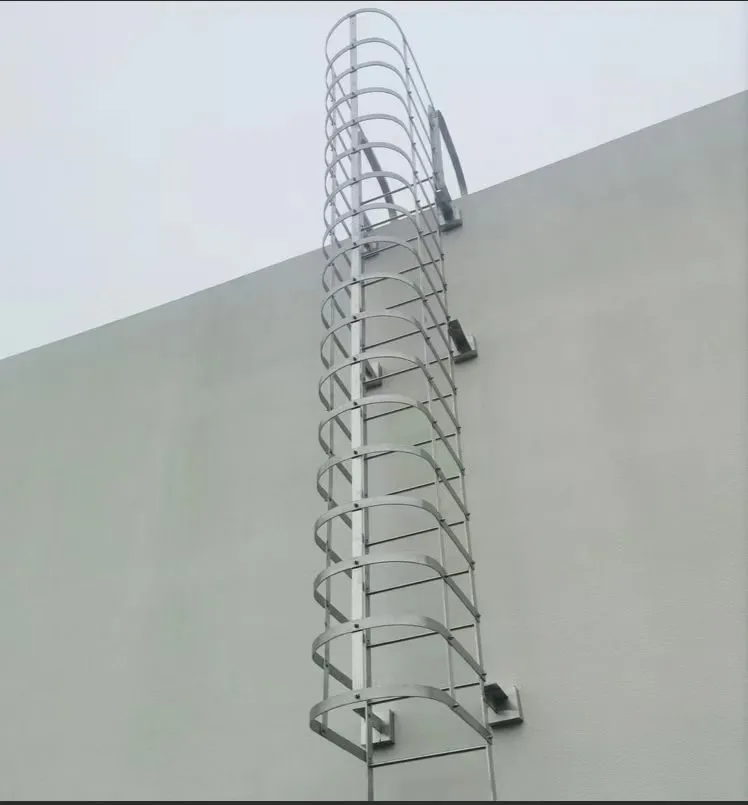
Wall-Mounted
Standoff brackets fix the ladder to a wall or column at the designed climbing clearance — the default permanent attachment.
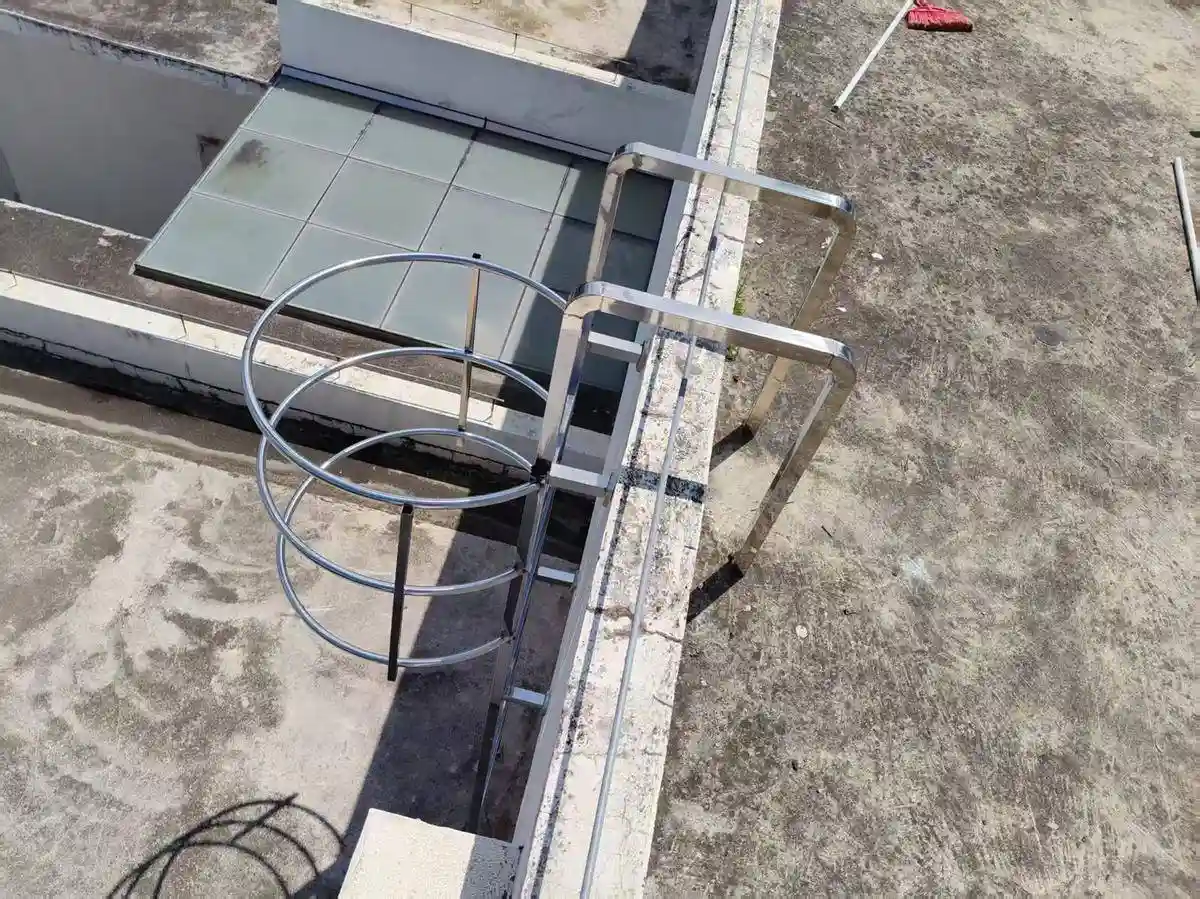
Vertical Fixed Ladder
Mounted at 75–90°, bolted to steelwork or embedded anchors — vertical access that never moves once installed.
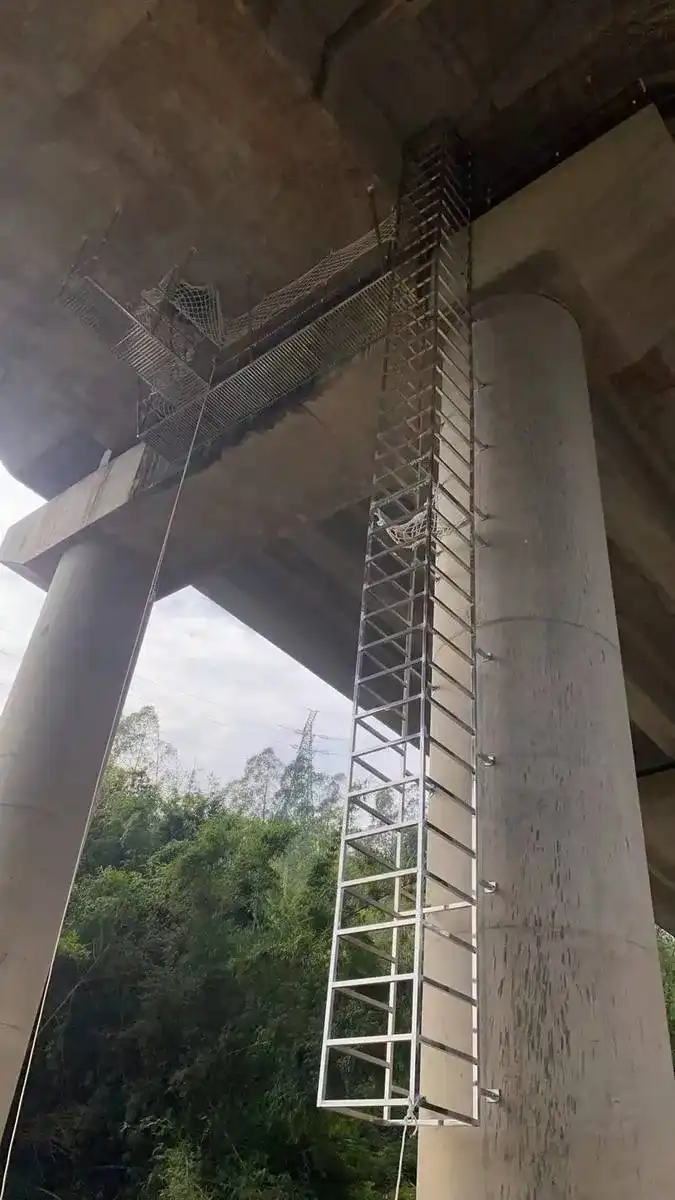
Wall Fixed Ladder
A wall-fixed run with the standoff set to match the substrate — brick, block, steel or concrete, anchors engineered to suit.
Certifications
Compliance & DoCumentation (OSHA/BS 4211/EN ISO 14122-4)
- OSHA 1910.27 — Full Compliance
- BS 4211:2005+A1:2015
- EN ISO 14122-4
- AS 1657
- Cal/OSHA Title 8
Documentation Package
Every order ships with complete documentation — no extra cost, no paywall.
-
Declaration of Conformity (DoC)
-
Material Test Certificates — EN 10204 3.1
-
Structural Calculations (incl. bracket anchors)
-
Welding Procedure Specifications
-
Surface treatment certificates (HDG per ISO 1461)
Factory-Direct Pricing
Factory-Direct Pricing & 24h Quote
Brackets, anchors, machining and welding are separate line items — so you see exactly what the permanent attachment costs. Docs included free.
Custom quotation priced by weight & process. Industry reference: caged ladders ≈ USD 899–1,099/ton.
Common questions
75°–90° from horizontal per the standards — outside that range the geometry and fall-protection rules change, so we flag it in the drawing review.
Top stringers are tied to the structure or extend past the landing with grab rails, so the last rungs stay stable when you step off.
No — permanent anchorage keeps them rigid: no setup, no leaning, no repositioning between uses, which is what makes them a fixed installation.
Periodic visual inspection of anchors, welds and coating per your site schedule — no daily setup or adjustment between uses.
A fixed ladder is non-self-supporting and permanently attached, so it cannot be repositioned by hand; a portable ladder is freestanding and moved between tasks.
Permanent Attachment
Are Fixed Ladders Permanently Attached? Yes — Here Is How
"Permanently attached" is part of the definition: a fixed ladder is secured to the structure so it cannot be repositioned by hand. The attachment method depends on the substrate — concrete, steel, masonry, or timber.
Attachment Methods We Use
| Method | Typical Use | Detail |
|---|---|---|
| Standoff brackets | Wall-mounted ladders | 8 mm plate brackets, 200 mm offset from wall |
| Through-bolting | Steel structure | M12 or M16 bolts through structural members |
| Welded lugs | Steel frames, tanks | Site or shop weld to parent steel, ISO 5817 C |
| Chemical anchors | Concrete / masonry | Injection anchors, e.g. M12 × 110 mm |
| Embedded plates | Cast-in concrete | Anchors cast before the pour |
Permanent vs Portable — The Difference
| Property | Fixed ladder | Portable ladder |
|---|---|---|
| Attachment | Permanent — bolted, welded, anchored | None — leaned or self-supporting |
| Length | Not adjustable | Adjustable or fixed-length |
| Load path | Structure carries the load | User carries setup risk |
| Fall protection | Cage, well, or PFAS rail built in | Not integrated |
| Removal | Requires tools & disconnection | Carried away |
A permanently attached ladder can still be removed and relocated — "permanent" describes how it is fixed, not that it can never move. Unbolt the anchors or cut the welds and the ladder comes down; our drawing review always includes the anchor specification for your substrate.
Are Fixed Ladders Permanently Attached — FAQ
Yes. By definition a fixed ladder is non-self-supporting and permanently attached to a structure — bolted, welded, or anchored so it cannot be repositioned by hand.
Yes, with tools. Unbolt the standoff brackets or cut the welds, then reinstall at the new location — the ladder is designed to be demountable, not disposable.
8 mm standoff brackets for walls, through-bolting or welded lugs for steel, chemical anchors for concrete and masonry, and embedded plates for cast-in work.
Yes — anchors must carry the ladder dead load plus a 1.5 kN rung load per climber. Our structural calculation covers the anchor specification for your substrate.
Yes. Bolted fixing is a permanent attachment method — the ladder cannot be moved without tools, which satisfies the definition of a fixed ladder.
Proven in real facilities
Reference projects are shown by industry, country and scale. Client names are available on request with approval.
National utility projects — 15+ countries
23 documented projects, 2021-2025 · 2025
All standardsEnergy & industrial clients — Global
500+ projects since 2004 · 2004-2025
Full compliance docsLargest single order — Malaysia
60 units in one project · 2021
HDGGet Your Quote
Talk to an Engineer
Free drawing review. Itemized quote in 24 hours. No obligation.
Why Work With Dengtai?
Full Compliance Docs
DoC, MTC, structural calcs included free.
24-Hour Quote
Engineering review + itemized quote within one day.
Global Delivery
8–12 containers/month. VCI + ISPM 15 packaging.
Request a Quote
Related Are Fixed Ladders Permanently Attached Pages
More on mounting, configurations and the standards that govern permanent access ladders.
Wall-Mounted Fixed Ladders
Standoff bracket mounting and clearance detail
Vertical Fixed Ladders
75–90° permanent access configurations
Permanent Fixed Ladders
Permanently attached access solutions built to spec
Fixed Ladder Installation
Anchoring, alignment and bracket fixing guidance
Fixed Ladder Parts
Side rails, rungs, standoff brackets and cage options
Compliance Standards
OSHA, BS 4211, EN ISO 14122-4 and AS 1657 references